

If you've spent years in affiliate marketing, Amazon FBA, SEO, or content sites, you probably know the pattern. A model works, then margins tighten, platform risk rises, or growth starts depending too much on one channel you don't control.
That's why more digital entrepreneurs are looking at businesses with real-world demand, local service delivery, and less dependence on a single algorithm. Home based franchise opportunities sit in that lane. They aren't passive. They aren't pure software. But they can combine something online operators already understand well: lead generation, conversion systems, remote management, and repeatable operations.
The interesting shift is that many of these businesses no longer look like the old image of franchising. They look more like operationally constrained service companies with a brand, a playbook, and a local territory. For the right buyer, that can be a serious next move.
Why Online Entrepreneurs Are Eyeing Home-Based Franchises
A lot of digital founders hit the same wall. They know how to drive clicks, build funnels, rank pages, run email, and automate follow-up. What they don't always have is a business model with durable local demand and lower platform fragility.
That's where home based franchise opportunities have become more relevant. Current franchise listings show a growing catalog of brands positioned specifically as home-based opportunities for 2026, and the bigger shift is conceptual, not cosmetic. These aren't just “work from home” businesses. They're increasingly service businesses that can be sold and managed remotely while delivery happens locally, which lowers overhead but raises the importance of digital lead flow and brand trust, as noted by the IFPG home-based franchise rankings.
That distinction matters if you come from an internet business background.
What attracts digital operators
A strong online entrepreneur usually sees the upside quickly:
- Lead generation transferability: Skills from SEO, Google Ads, local landing pages, review generation, and CRM follow-up often map directly onto service franchises.
- System bias: Franchise models appeal to founders who already like SOPs, dashboards, scripts, and repeatable workflows.
- Less invention risk: You're usually not inventing an offer from scratch. You're operating an existing one inside a defined market.
- Hybrid scalability: You can often sell from a laptop while a local team, contractors, or field operators handle fulfillment.
Practical rule: If your edge is demand generation and process design, a home-based franchise can make more sense than another content site or commodity e-commerce launch.
Why this isn't the same as buying “a job”
Some home-based franchises absolutely are owner-heavy. If the model depends on your personal labor all day, every day, the business may cap out fast. But the stronger models let the owner act more like an operator. You manage intake, quoting, scheduling, staffing, retention, and local marketing.
That's a familiar role for someone used to running a remote business stack.
The opportunity is real. So are the trade-offs. You get structure and market validation, but you give up some freedom. You lower some risks, but you accept new ones, especially around territory quality, unit economics, and franchisor competence.
What Exactly Is a Home-Based Franchise
A home-based franchise is easiest to understand as a business-in-a-box operating system. You're not just buying a logo. You're buying the right to use a brand, plus a documented operating model, training, support, and usually a prescribed tech stack.
For a digital entrepreneur, that's a very different proposition from launching a new niche site, FBA product, or info product from zero. In those models, you normally build the offer, branding, messaging, operating process, and growth engine yourself. In a franchise, the franchisor has already made many of those decisions for you.
A look at the bigger market helps explain why this isn't some fringe category. In 2024, the U.S. had an estimated 831,000 franchise establishments and franchising's economic output was estimated at roughly $897 billion, according to Neighborly's franchising statistics page. On the service side, the U.S. home-services market was valued at $225,023 million in 2024 and projected to reach $395,857 million by 2032 on that same source. That scale matters because it means you're evaluating a mature commercial system, not a trendy side hustle.
A simple visual helps frame the money side before you get too deep into the model.

What you're actually buying
Most home-based franchises include four core layers:
Brand license
You get the right to operate under a recognized name in a defined territory.Operating playbook
This usually includes scripts, pricing frameworks, vendor standards, hiring guidance, service workflows, and reporting expectations.Support infrastructure
Training, launch support, field coaching, and centralized resources are part of what you're paying ongoing fees for.Technology environment
This is a major issue for digital entrepreneurs. If the CRM, communications, scheduling, quoting, and reporting stack is weak, the whole model gets harder to scale.
Why the tech stack matters more than many buyers think
A home-based franchise can be operationally lean, but only if the systems are usable. If leads come in and disappear into spreadsheets, if follow-up depends on manual texting, or if dispatching is clunky, the advertised simplicity breaks down fast.
That's one reason a broader guide to starting a successful franchise business is useful before you start comparing brands. The structure of a franchise matters just as much as the category.
Later in the buying process, you'll want to hear operators discuss the model in plain terms, not sales language.
The right way to view a home-based franchise is not “cheap business ownership.” It's “structured business ownership with constraints.”
Those constraints are exactly why some operators thrive in franchising and others hate it.
The Real Costs and Earning Potential
Most buyers make the same first mistake. They anchor on the franchise fee because it's the cleanest number in the sales process.
That number rarely tells you enough.
The better lens is what one franchise-industry guide calls the investment-to-revenue ceiling ratio. Their warning is blunt: “look at the income ceiling, not just the cost floor” and verify that the FDD shows revenue potential proportional to the total investment, not just a cheap startup price, as discussed in this home-based franchise opportunity guide.

Cheap entry can hide a weak model
A low-cost franchise can still be a bad buy if one of these is true:
- Owner dependency is too high: If fulfillment depends heavily on your own time, revenue may stall once your schedule fills up.
- Territory economics are weak: A “protected” area doesn't help if the customer density or demand profile is poor.
- Service capacity is capped: Some models can only support a narrow volume unless you add labor complexity fast.
- The lead engine isn't reliable: If the brand expects you to generate demand but gives weak marketing support, your real startup burden rises.
Digital entrepreneurs should care about this more than most buyers do. You already know that acquisition friction destroys tidy spreadsheets.
How to model a franchise like an operator
Don't ask, “What does it cost to start?” Ask, “What does this model need to reach stable cash flow, and what caps growth?”
A practical review usually includes:
- Total initial cash need: Include the fee, equipment, software, launch marketing, and enough working capital to survive a slow start.
- Ongoing fee drag: Royalties, fund contributions, software charges, and any required vendors affect every sale.
- Lead economics: If you're buying clicks or building local SEO, what does it take to turn interest into booked work?
- Labor model: Employee-heavy businesses and contractor-heavy businesses scale differently and break differently.
- Ceiling scenario: At maturity, what stops this business from doubling. Territory, labor, owner time, or local demand?
A franchise with a lower sticker price but a hard earnings ceiling can be worse than a more expensive model with real delegation paths.
For readers comparing business models generally, a practical counterpoint is this look at work-from-home products and business angles. It helps clarify whether products, services, or systems form your core business advantage.
Where the FDD matters most
The franchise sales process will always sound smoother than actual operations. Your job is to inspect the FDD for evidence that the economics make sense in actual operations.
Item 19 is where many candidates focus first because it may include financial performance representations. But don't stop there. Cross-check anything attractive against fee structure, required systems, support obligations, and franchisee conversations.
If the financial story only works in the sales deck, walk.
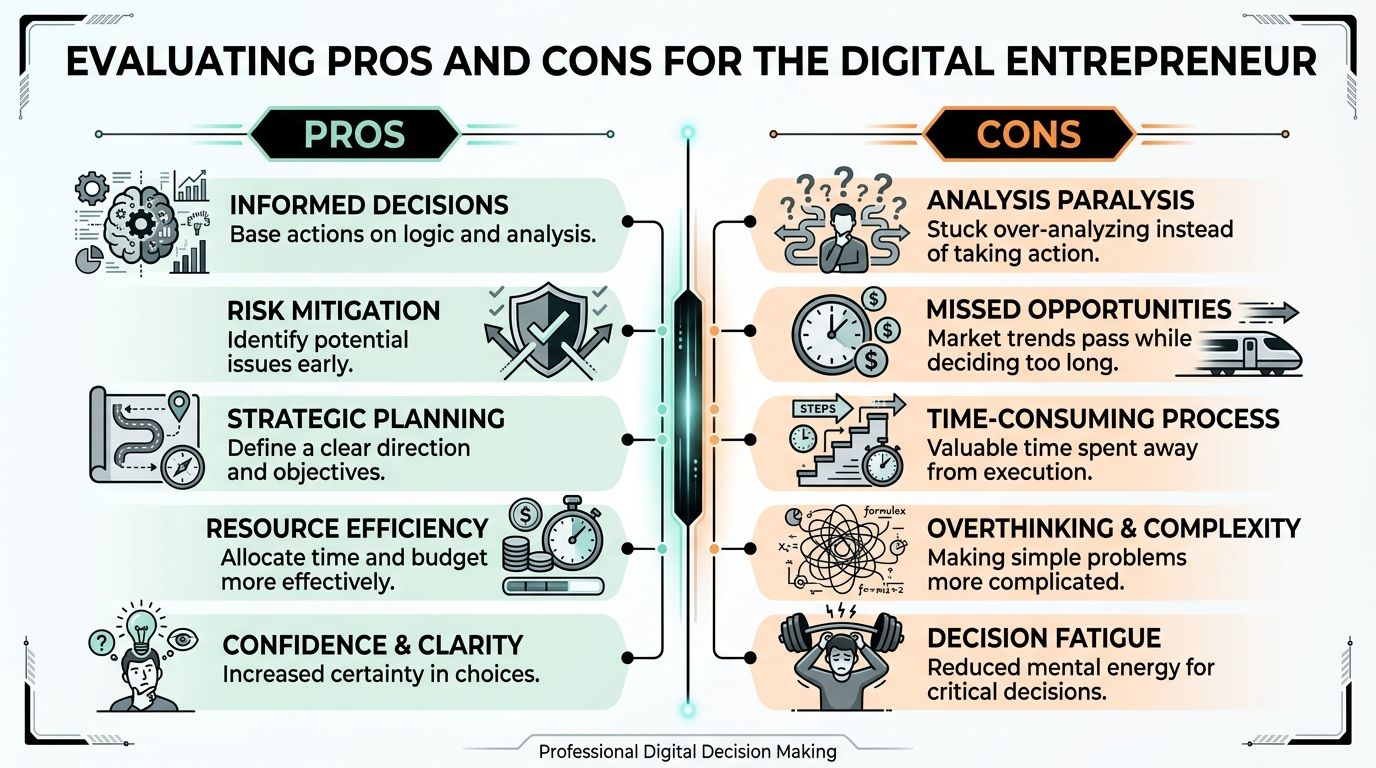
Evaluating Pros and Cons for the Digital Entrepreneur
Home-based franchises make the most sense when you compare them to what online founders are already used to. Not to brick-and-mortar retail. To affiliate sites, Amazon listings, content assets, agency models, and local lead generation plays.
The biggest structural upside is overhead. Independent franchise guidance notes that home-based concepts often avoid rent, build-out, and inventory costs, with startup costs often 50–80% lower than brick-and-mortar models. The same guidance notes that about 70% of home-based businesses are still considered successful after three years, which helps explain why the model is attractive to solo operators and buyers who want lower fixed-cost exposure, according to Exit Factor's home-based franchise overview.
Where franchising beats solo online businesses
If you're tired of building from scratch, a franchise can feel refreshingly concrete.
- You start with trust: Brand recognition won't close every sale, but it can shorten the credibility gap.
- You inherit process: That matters if you'd rather optimize a model than invent one.
- Demand is local and practical: Home services, support services, and recurring B2B work often solve immediate problems people already pay for.
- The stack can be delegated: Scheduling, intake, follow-up, quoting, and review requests can often move into admin systems fast.
Operational efficiency is crucial. Many owners eventually reduce their own involvement by standardizing admin work and hiring a virtual assistant to handle lead intake, booking support, customer follow-up, and basic CRM hygiene.
Where digital founders get frustrated
The same things that protect the model can irritate an online entrepreneur.
| Friction point | Why it matters |
|---|---|
| Brand rules | You usually can't rewrite the offer, pricing logic, or creative direction however you want |
| Slower pivots | A solo founder can change landing pages, positioning, and operations overnight. A franchise owner often can't |
| Ongoing fees | Royalties and required contributions reduce the upside of every incremental sale |
| Territory limits | You may have less expansion flexibility than you're used to in digital markets |
Field observation: Strong digital operators usually struggle less with marketing than with accepting operational standardization.
That's the core trade. You gain a framework and lose some freedom.
Best fit and poor fit
A franchise is often a strong fit if you like systems, don't need full creative control, and want a business tied to local demand instead of algorithmic traffic alone. It's usually a poor fit if your edge comes from constant experimentation, aggressive offer changes, or brand-building entirely on your own terms.
Some founders also prefer to expand without employees through partnerships, contractors, licensing, or media assets. That route can work. It just solves a different problem.
Your Checklist for Vetting Franchise Opportunities
A franchise should be vetted the same way you'd vet a niche before building a content site or buying an e-commerce brand. You need evidence, not enthusiasm.
The biggest category-level context is useful here. One industry report estimates that over 51% of all small businesses in the United States are home based, that home-based businesses generate nearly $430 billion per year nationally, and that another home-based business starts every 12 seconds. That same report says about 70% of home-based businesses are still considered successful after three years, while roughly 60% do not have additional employees, which helps explain why solo and low-overhead operators are drawn to the model, according to the Franchise Direct home-based franchise industry report.
Those numbers explain the appeal. They don't tell you whether a specific franchise is worth buying.
Read the FDD like a buyer, not a fan
Most candidates either overreact to legal language or skip it because it feels dense. Both mistakes are expensive.
Use this sequence:
Start with the fee sections
Find every required payment, not just the initial one. If the model relies on multiple software tools, approved vendors, or mandatory campaigns, note each recurring cost.Review territory language carefully
“Protected” can mean less than buyers assume. You need to know where you can market, where you can sell, and what the franchisor can still do inside your area.Check for litigation and turnover patterns
One complaint isn't automatically disqualifying. Patterns are. Repeated disputes around support, territory, or earnings deserve scrutiny.
A useful shortcut during early research is using an FDD intelligence platform to compare documents and flag differences before you spend weeks on calls.
Call franchisees with a script
This is the closest thing to customer research in franchising. Don't ask if they “like the brand.” Ask operational questions.
Use questions like these:
- Lead flow: Where do your best leads come from?
- Ramp: What was harder in the first year than the franchisor suggested?
- Support: When something breaks, who helps and how fast?
- Margins: Which recurring fees or costs hurt more than you expected?
- Owner role: Are you building a managed business or are you still the main operator?
- Retention: If you could start over, would you buy the same territory again?
Don't just speak with current franchisees. Former franchisees often tell you where the model cracks under pressure.
Watch for red flags that digital buyers sometimes miss
Digital entrepreneurs often focus heavily on marketing because that's where they're confident. The risk is underweighting field execution.
Common warning signs include:
- Weak onboarding: Good sales process, vague launch plan
- Tool sprawl: Multiple disconnected systems with no real operating dashboard
- No local acquisition clarity: The brand talks “marketing” but can't explain channel mix in practical terms
- Owner bottleneck by design: The business only works when the owner personally handles too much
If you can't map the operation from lead to delivery to repeat business, you're not ready to buy it.
Three Vetted Home-Based Franchise Models Compared
Instead of looking for one universal winner, it's smarter to compare franchise types by fit. A digital entrepreneur usually wins when the business rewards lead generation, follow-up discipline, and process management.
Below is a simple framework using three recognizable model types and example brands. The examples are there to ground the categories, not to make performance claims.
Comparison of Home-Based Franchise Models (2026)
| Metric | Model A B2C Service (e.g., MaidPro) | Model B B2B Consulting (e.g., The Growth Coach) | Model C Tech Service (e.g., uBreakiFix) |
|---|---|---|---|
| Core offer | Local household service | Advisory, coaching, or business improvement services | Technical repair or support services |
| Typical sales motion | Local lead gen, quote, schedule, repeat service | Relationship selling, referrals, outbound, networking | Search demand, urgent need, reputation-driven conversion |
| Best fit for digital operator | Strong if you understand local SEO and service funnels | Strong if you're comfortable with consultative selling | Mixed fit, depends on technical depth and operations |
| Scalability | Good if delivery can be delegated to staff or crews | Often limited by owner expertise unless team-based | Can scale, but may require tighter quality control |
| Owner involvement | Moderate early, lower later if admin and labor stabilize | Often high if owner is the product | Moderate to high depending on service complexity |
| Brand leverage | Helpful for trust and close rates | Useful, but owner credibility still matters a lot | Often important because buyers want reliability |
| Main risk | Staffing and service consistency | Revenue tied to owner time | Technical execution and support complexity |
| Digital advantage | Reviews, PPC, local landing pages, automation | Funnel design, email nurture, positioning | Search capture, urgent-intent conversion, CRM discipline |
How to choose among them
The B2C service model is often the cleanest entry point for an online operator. The demand is easier to understand, local search can matter a lot, and fulfillment can eventually move away from the owner. If you've ever built lead-gen sites or ranked local pages, this category will feel familiar.
The B2B consulting model appeals to marketers, agency owners, and operators who like strategy. But there's a catch. If the client is buying your thinking more than the brand's system, the business may become difficult to detach from you personally.
The tech service model can be attractive because customers often have immediate intent and clear need. But it usually demands tighter execution. Technical mistakes, support delays, and quality control can do more damage here than in a simpler service category.
The decision filter that matters most
Ask one question before comparing brands inside any category:
Can this business become a managed operation, or will it always depend on me as the primary producer?
That answer matters more than whether the initial investment looks low or the website looks polished.
For a digital entrepreneur, the strongest home based franchise opportunities usually share three traits. They have clear local demand, strong repeatable systems, and a path to move owner time out of fulfillment.
Is a Home-Based Franchise Your Next Business Move
A home-based franchise makes sense when you want structure more than invention. You're trading some upside and flexibility for a model that already has a market, a playbook, and operational guardrails.
That trade can be smart.
If you're an online entrepreneur with real skill in lead generation, CRM workflows, sales process, review management, and remote team coordination, you may be better positioned than the average franchise buyer. You already understand traffic quality, conversion bottlenecks, and why operations decide whether marketing spend pays back.
A simple final filter helps:
- Say yes if you want a proven model, can follow standards, and prefer optimizing a system over creating one from zero.
- Say no if you need full creative control, hate recurring fees, or only get energized when you're building your own brand from scratch.
- Pause and investigate further if the business looks attractive but seems capped by your personal time.
The best home based franchise opportunities for digital entrepreneurs aren't the flashiest or cheapest. They're the ones where your online skills improve an already workable local business, and where the operation can eventually run with less of you in the middle.
That's the bar. If a franchise can't clear it, keep looking.