
A lot of digital entrepreneurs reach the same point. The main income stream looks healthy on paper, then one change hits. A client pauses. Paid traffic gets more expensive. Search rankings slip. A marketplace account gets limited. Revenue falls faster than expected because too much of it depends on one channel.
Passive income is the fix only if you define it correctly. The goal is not to stop working. The goal is to build digital assets that keep paying after the setup work is done, with maintenance that stays reasonable.
That distinction matters because these models do not perform equally. Some are quick to launch and easy to test, but they top out fast or depend too heavily on one platform. Others take longer to get traction, yet produce stronger cash flow six to twelve months later. A good ranking needs to reflect that trade-off instead of treating every idea like it belongs in the same bucket.
This list does that. The ten models below are ranked for digital entrepreneurs based on startup friction, margin potential, upkeep, platform risk, and how well each model scales once the system is in place.
Each one also needs to pass a practical test. Can it keep producing without turning into another full-time job? Can it survive a traffic dip, a supplier issue, or a policy change? Can you launch it with a clear checklist instead of months of vague planning?
Those are the standards behind this ranking.
You will see ten proven passive income models, from affiliate sites and Amazon FBA to memberships and digital assets, with quick-launch checklists, real examples, and tool recommendations. Some are closer to asset building than true passivity. That is fine. In practice, the best passive income businesses start as active projects, then become lighter and more predictable as the asset matures.
1. Affiliate Marketing and Niche Sites
A small affiliate site can start as five pages and turn into a dependable revenue asset if the topic is tight and the content solves buying questions better than everyone else on page one. That is why this model earns the top spot for many digital entrepreneurs. Startup cost is low, margins are high, and operations stay light compared with inventory-based businesses.
The upside is real. So is the trade-off. Affiliate sites are simple to launch, but they are not forgiving. Thin reviews, copied product descriptions, and broad niche targeting usually stall out. The sites that last are built around purchase intent, original insight, and enough diversification to survive a commission cut or traffic swing.
Why this model still deserves the top spot
Affiliate marketing works best when the site sits close to the transaction. A visitor searching for "best invoicing software for contractors" is far more valuable than a visitor searching for "how to start freelancing." One query signals buying intent. The other often signals research with no immediate purchase.
That difference shapes the whole business.
A stronger niche site usually has three traits:
- Tight topic selection: "Meal prep containers for truck drivers" beats "kitchen products."
- Commercial content first: Comparisons, alternatives, product roundups, and use-case pages tend to monetize faster than general education posts.
- Revenue spread across programs: Amazon Associates can be part of the mix, but direct software partnerships, Awin, ShareASale, and Impact often produce better payouts and lower platform risk.
Originality matters more than volume. Screenshots, product testing notes, customer review synthesis, and honest cons do more for conversion than publishing fifty generic listicles.
Quick-launch checklist
- Pick a niche with buyer intent: Look for searches tied to product selection, not casual curiosity.
- Validate monetization paths: Check that at least two or three affiliate programs fit the niche.
- Publish the first money pages first: Start with comparison posts, "best for" pages, and alternatives.
- Set up measurement early: Use Google Analytics, Search Console, and affiliate dashboard tracking from the start.
- Plan one traffic backup: Email capture, Pinterest, or YouTube clips can reduce dependence on Google.
A practical example is a founder who builds a site around email tools for agencies. They publish "Mailchimp vs Klaviyo for small ecommerce brands," add screenshots from real accounts, include setup pros and cons, and collect emails with a migration checklist. That site can earn from affiliate commissions, then add consulting leads or a small digital product later.
If you are still deciding between low-overhead affiliate content and a product-based model, this comparison of Amazon FBA vs dropshipping business models helps clarify where affiliate sites sit on the risk and workload spectrum.
Tools that make the model easier to run
A basic stack is enough in the beginning:
- WordPress or Webflow for publishing
- Ahrefs, Semrush, or LowFruits for keyword research
- Google Search Console for indexing and query data
- ThirstyAffiliates or Pretty Links for link management
- ConvertKit or Beehiiv if you want to add email capture early
Do not overbuild the stack. Better research and better pages matter more than paying for six tools in month one.
The catch is maintenance. Rankings shift, affiliate terms change, and weak sites get hit first when search quality standards tighten. For digital entrepreneurs who want a proven model with low startup friction and strong upside, affiliate marketing still belongs near the top of the list. It just rewards precision, not scale for its own sake.
2. Amazon FBA
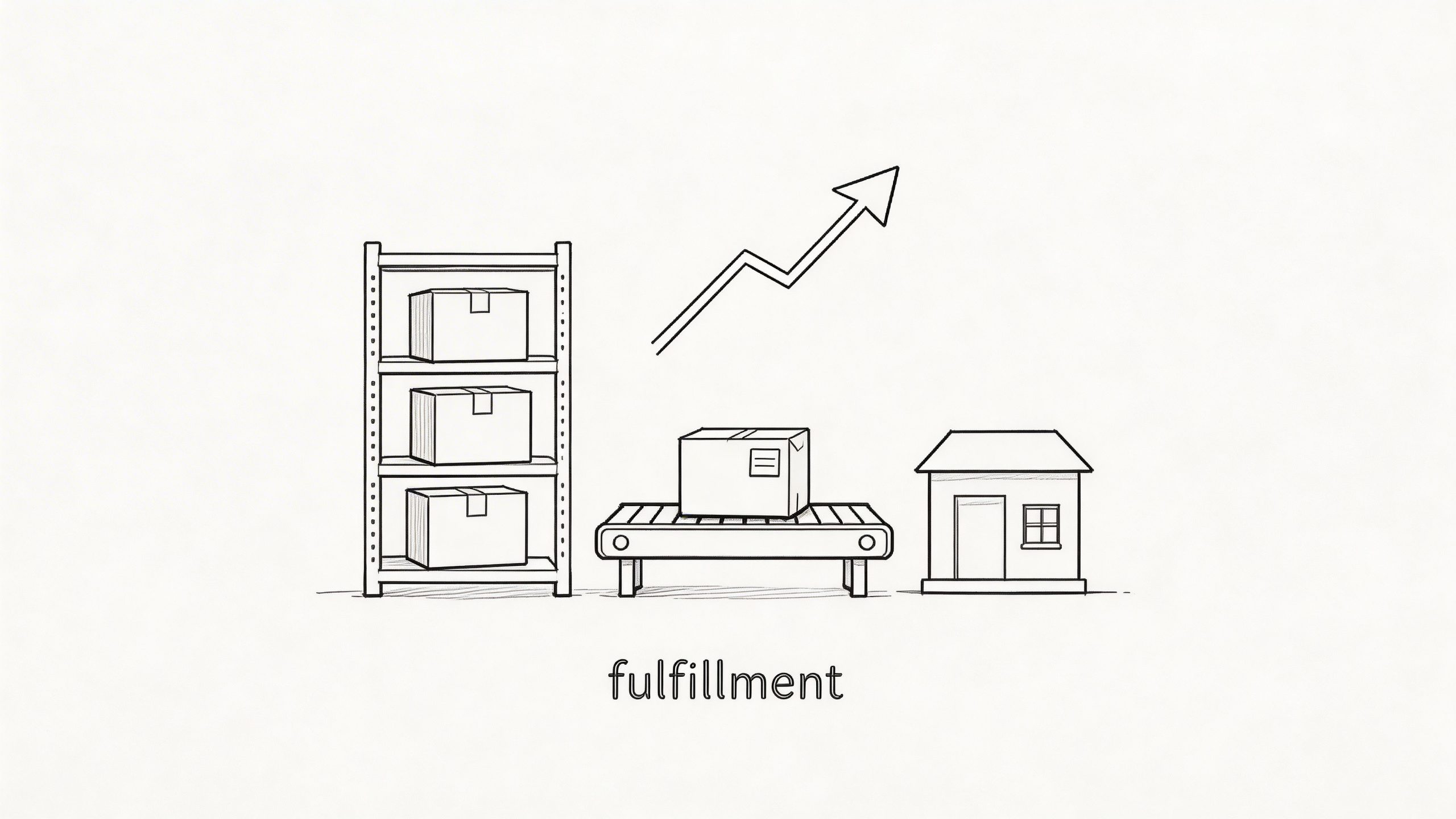
Amazon FBA is less passive than affiliate marketing, but it can produce stronger cash flow if you manage product selection and operations well. Amazon handles fulfillment and much of the customer service. You focus on sourcing, margins, listings, and inventory decisions.
For digital entrepreneurs who want a physical-product asset without building a warehouse operation, FBA is still one of the cleaner paths.
Right near the start, it helps to compare business models before you commit. EntreResource has a practical breakdown of Amazon FBA vs dropshipping if you’re choosing between the two.
What separates durable FBA sellers from the rest
The weak version of FBA is buying random products because a tool says demand exists. The stronger version is building a product line where you understand buyer complaints, margin pressure, and replenishment cycles.
Useful tools include Helium 10, Jungle Scout, and Keepa. They help with product research, historical pricing, and listing intelligence. But no tool fixes a bad product.
Focus on products where you can improve one of three things:
- Quality
- Bundling
- Positioning
If the listing is already dominated by entrenched sellers and price is the only lever, keep moving.
Quick-launch checklist
- Start with research: Use Helium 10, Jungle Scout, or Keepa before buying any inventory.
- Check review patterns: Low-star complaints often reveal product gaps you can fix.
- Calculate landed economics: Include fees, returns, storage, and ad spend.
- Test before branding hard: Wholesale or small-batch sourcing reduces early risk.
A common real-world route is to start with simple resale or wholesale testing, then move into private label only after you know the category sells consistently. That sequence is slower, but it’s safer.
FBA also has a compliance side many sellers underestimate. For digital entrepreneurs scaling across jurisdictions, taxes can become the profit leak that nobody talks about. Bankrate’s passive income coverage highlights that U.S. creators can face self-employment taxes up to 15.3% on net earnings, and state sales tax nexus issues can appear after $100k in sales across states, depending on the business setup and filing footprint. See Bankrate’s overview of passive income ideas and the tax angle.
Watch the mechanics in action below.
FBA works best for operators who like systems, not novelty. If you enjoy spreadsheets, supplier negotiation, and listing optimization, it can become a strong semi-passive engine. If you hate operational detail, it’ll feel heavy fast.
3. Self-Publishing and Digital Products
This model gets oversold because people confuse “digital” with “easy.” Still, when the offer solves a specific problem, self-publishing and digital products can become one of the cleanest passive income business ideas on the list.
The asset can take many forms. E-books. Templates. Mini-courses. Swipe files. Paid guides. Toolkits. The format matters less than the problem it solves.
Where this model actually shines
The best digital products don’t try to teach everything. They remove friction for a narrow outcome.
Examples:
- A keyword research template for niche site builders
- A low-content publishing workflow for KDP authors
- A launch checklist for first-time course creators
- A notion dashboard for Amazon sellers tracking inventory and ads
That’s why “validate before you build” isn’t generic advice here. It’s the whole margin. If buyers don’t care, the upside of zero inventory doesn’t help.
The stronger platforms depend on what you sell:
- Amazon KDP for books and workbooks
- Gumroad for lightweight digital files
- Teachable for structured courses
- ConvertKit or Kit checkout plus email for audience-driven launches
Quick-launch checklist
- Start with one narrow promise: Solve one urgent problem.
- Pre-sell the angle: Use an email waitlist or audience poll before full production.
- Package for speed: Templates and guides usually launch faster than full courses.
- Build a simple funnel: Product page, checkout, thank-you page, email follow-up.
One of the more useful insights in the background research is that automated funnels can turn a course or niche offer into recurring sales without constant launches. That tracks with practice. The creators who win here don’t just publish. They build a simple evergreen funnel behind the product.
A digital product is passive only after the positioning, checkout flow, and traffic source are working.
Trade-offs matter. Refunds happen. Course content gets stale. Support requests don’t disappear. But compared with physical inventory, the upkeep is lighter, and the margins can stay attractive once the asset is built.
4. YouTube Channel Monetization
You publish a tutorial once, and six months later it is still bringing in views, affiliate clicks, and email subscribers. That is the part of YouTube digital entrepreneurs care about. A good channel can keep producing returns long after the upload day, which is why I would rank it near the top of any serious list of passive income models.
It still takes real work upfront. You need a content system, a clear topic, and a monetization path from the start. Channels that treat YouTube as a business asset usually outperform channels that just chase views.
What works on YouTube now
Focused channels win more often than broad personality channels because the revenue path is easier to map.
The strongest formats usually fit one of these models:
- Software tutorials tied to affiliate programs
- Product comparison videos with buyer-intent keywords
- Educational content that sends viewers to an email opt-in
- Process channels built around topics like FBA, SEO, self-publishing, or creator tools
That last point matters more than many beginners expect. YouTube income rarely comes from one viral upload. It comes from a library with different jobs. One video ranks in search. Another builds trust. Another converts a viewer into a buyer. That stack is what makes the model durable.
For digital entrepreneurs, YouTube also works well as the top of a broader funnel. A tutorial can lead to a free checklist, and that subscriber can later convert through email. If email will be part of your monetization mix, this guide on how much you can earn with email marketing helps frame the revenue potential beyond ad payouts alone.
Quick-launch checklist
- Choose one narrow topic: Viewers should understand the channel in one sentence.
- Start with search-led content: Tutorials, comparisons, and problem-solving videos usually age better than commentary.
- Set up monetization early: Add affiliate links, lead magnets, and simple calls to action from the first upload.
- Batch production: Record multiple videos in one session to keep publishing consistent.
- Use basic tools: TubeBuddy or VidIQ for keyword research, Descript or CapCut for editing, and Kit or Beehiiv for email capture.
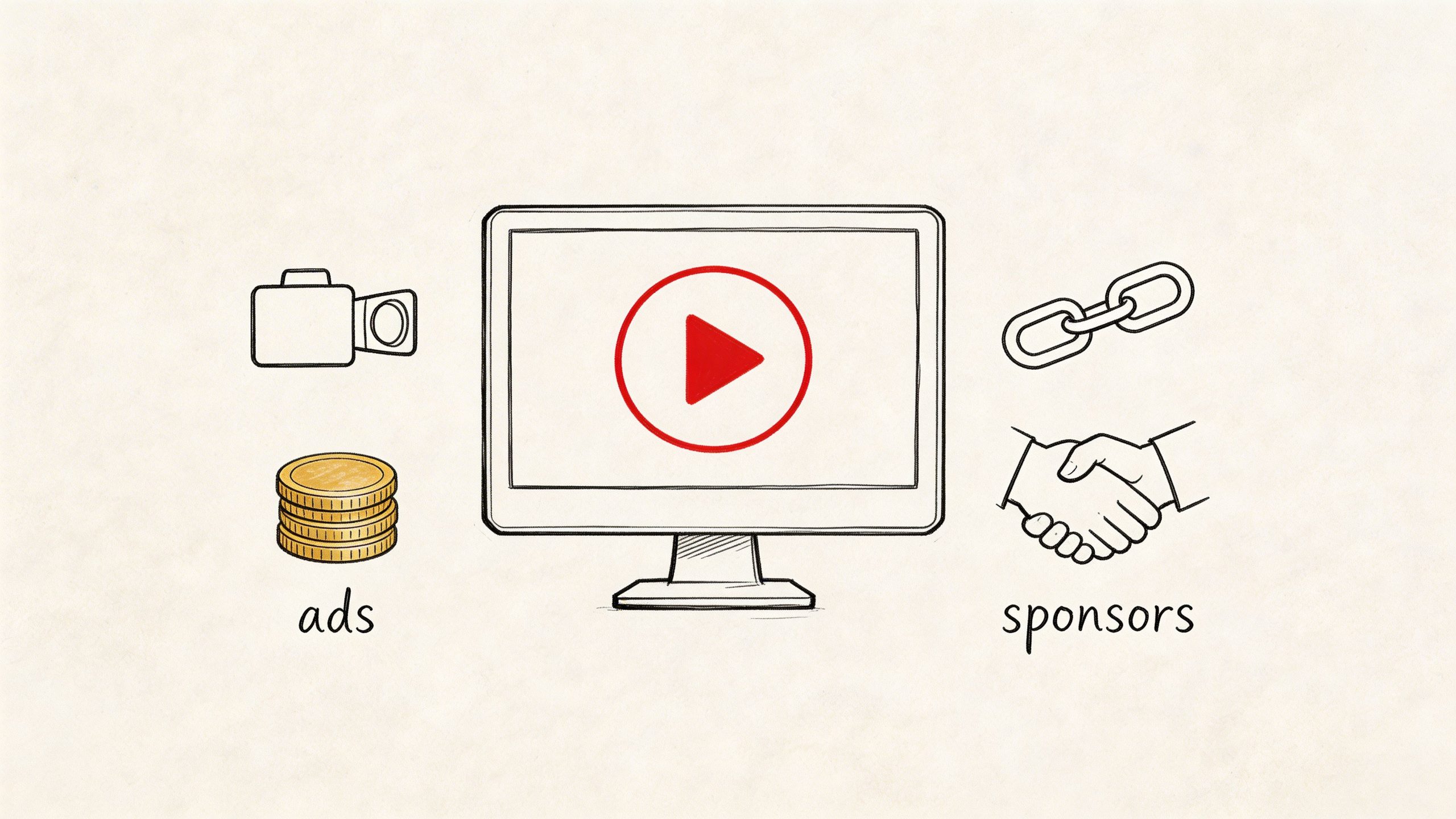
A practical example is a creator who teaches one category of software, publishes weekly walkthroughs, and offers a downloadable setup checklist in every description. That channel can earn from affiliate commissions first, then layer in ads, sponsors, and owned products once traffic grows. It is a cleaner model than relying on ad revenue alone.
The trade-offs are real. YouTube depends on platform rules, watch behavior, and topic demand. Content also has a shelf life. Software tutorials need updates, thumbnails need testing, and weak topics die fast. But for entrepreneurs who can teach clearly on camera or through screen recordings, YouTube remains one of the better long-tail assets in this ranked list because each strong video keeps working after it is published.
5. Email List Monetization
An email list is less flashy than a YouTube channel and more durable than most social traffic. If I had to choose one asset to protect across multiple passive income business ideas, it would be the list.
You own the relationship. You can promote affiliate offers, sell digital products, launch memberships, and revive old content without begging an algorithm for reach.
EntreResource also has a useful related breakdown on how much can you earn with email marketing, which is worth reviewing if this becomes your primary monetization layer.
Why email is the glue asset
The publisher brief includes one example that matters here. The Weekly 5 newsletter reaches 45,000+ subscribers. That illustrates the strategic value of email. It’s not just another channel. It’s a distribution asset that can support many other revenue streams.
Email also holds up better when search or social gets unstable. In the verified data, one useful signal is that niche email lists with 45k+ subscribers like Weekly 5 retain 40% higher, which is exactly why serious operators keep pulling people off rented platforms and into owned lists.
Useful tools depend on the setup:
- Kit / ConvertKit for creator-friendly automations
- Beehiiv for newsletter-first publishing
- Mailchimp for broad beginner familiarity
- Thrive Leads or ConvertBox for capture optimization
Quick-launch checklist
- Create one lead magnet: A checklist, mini-guide, or template tied to your niche.
- Place opt-ins on intent pages: Add them where readers are already problem-aware.
- Write a short welcome sequence: Deliver the lead magnet, then build trust before pitching.
- Segment early: Tag by interest, click behavior, or offer type.
Field note: The list gets valuable when subscribers trust your filters, not when you blast more promotions.
A strong real-world pattern is simple. A blogger publishes comparison posts, captures subscribers with a buyer’s toolkit, then sends one helpful weekly email plus occasional affiliate or product promotions. That turns scattered traffic into repeatable revenue.
The mistake is treating the list like a coupon board. If every email pitches, unsubscribes rise and trust dies. Send useful content most of the time. Monetize with intent, not desperation.
6. Online Arbitrage and Reselling
This one sits in the middle of the ranking because it works, but it’s less passive than the digital models above it. You’re sourcing products at one price and reselling where demand is stronger. The spread is the business.
It can generate cash quickly. It can also become a treadmill if you never systemize sourcing, repricing, and replenishment.
Best use case for this model
Online arbitrage is strong for entrepreneurs who want to learn e-commerce mechanics before committing to private label or larger wholesale inventory. You learn marketplaces, listing behavior, fees, price movement, and supply timing without inventing a brand from scratch.
Good supporting tools include:
- Keepa for price history
- Helium 10 for marketplace research
- SellerAmp for evaluating deals
- Google Sheets or Airtable for sourcing logs
If you’re actively sourcing, EntreResource maintains a practical directory of 488 websites for online arbitrage product sourcing. That’s the kind of resource that saves real time.
Quick-launch checklist
- Start with small batches: Test demand before tying up more cash.
- Track every fee: Marketplace cuts and shipping can erase a spread fast.
- Source from multiple stores: One supplier shouldn’t control your business.
- Review price history: Don’t buy based on today’s spread alone.
A common scenario is a seller finding underpriced products across retail sites, sending winning SKUs into Amazon FBA, and gradually building a repeatable list of profitable replenishments. That can become semi-passive once systems are in place.
The limitation is obvious. If you stop sourcing completely, growth stalls. This is better described as “cash-flowing advantage” than true passive income. It’s still useful because it teaches marketplace discipline and can fund more passive assets later.
7. Blog Monetization
A blog can publish while you sleep, pull in search traffic from posts you wrote months ago, and send readers into affiliate offers, ad slots, and your email funnel. That is the appeal. The catch is simple. Blog income turns passive only after you build a site with clear expertise, commercial intent, and an update process that keeps top pages useful.
For digital entrepreneurs, I would rank blog monetization in the middle of the pack. It is easier to start than Amazon FBA and less inventory-heavy than reselling, but it usually takes longer to compound than email monetization if you already have an audience. The upside is diversification. One strong article can earn from several channels at once.
What a blog should monetize
The blog model works best when each post has a job. Some posts attract broad search traffic. Others target comparison keywords and drive affiliate clicks. Some collect email subscribers. A few can support direct sponsorships or lead into a paid product.
That mix matters because ad RPMs change, affiliate programs cut rates, and rankings move. A blog with one revenue source is fragile. A blog with layered monetization has room to absorb those swings.
A practical example is a site in a commercially useful niche such as creator software, bookkeeping tools for freelancers, or niche B2B workflows. A review post earns affiliate commissions. A tutorial post brings steady search traffic and ad revenue. A checklist or template post converts readers into subscribers who later buy a small digital product.
Quick-launch checklist
- Choose a niche with buyer intent: Traffic is less valuable if readers never purchase anything.
- Map content by intent: Publish tutorials, comparisons, and problem-solving posts, not random articles.
- Set up at least two monetization paths: Combine ads, affiliates, sponsors, lead capture, or your own product.
- Refresh top pages on a schedule: Rankings fade when examples, screenshots, and recommendations get outdated.
Tool choices matter here because blog businesses fail in the boring places. Use WordPress or Webflow for publishing, Ahrefs or Semrush for keyword research, ConvertKit or Beehiiv for email capture, and a simple content tracker in Airtable or Google Sheets so update cycles do not slip.
The trade-off is maintenance. Blogs reward consistency and punish thin, generic content. If you have real experience in the niche and can publish pages that answer specific buying questions better than what is already ranking, a blog is still one of the more durable passive income models on this list. If you want fast cash with minimal upkeep, it is not.
8. Membership Sites and Communities
Memberships look great from the outside because recurring revenue feels predictable. Inside the business, they can become heavy if the offer depends on constant novelty or a founder who has to show up live every week.
That doesn’t mean they’re bad. It means you need the right structure.
What makes a membership sustainable
The strongest memberships solve an ongoing problem. They don’t just host discussion.
Examples:
- A private community for FBA sellers sharing sourcing workflows
- A membership for bloggers with monthly content audits
- A creator community with templates, office hours, and deal reviews
- A niche industry group with job leads, vendor lists, and case discussions
The offer needs more than chat. Give members tools, frameworks, archives, and shortcuts.
One reason to be cautious is churn. In the verified data, membership models are cited with 65% average subscriber churn when content gets stale. That’s the hidden weakness of many “passive” recurring offers. If members don’t get fresh utility, they leave.
Quick-launch checklist
- Start with a beta cohort: Validate demand before building a big platform.
- Design around ongoing value: Templates, databases, archives, and community access beat endless new lessons.
- Track churn by reason: Don’t just watch cancellations. Learn why people leave.
- Add annual options: They improve cash flow and reduce monthly decision fatigue.
Members don’t stay because billing is recurring. They stay because the outcome keeps recurring.
Tools like Circle, Skool, Discord, Kajabi, and Slack can all work depending on the audience. The platform matters less than the promise and retention plan.
This model fits entrepreneurs who already have an audience and a point of view. It’s weaker for beginners with no list, no traffic, and no clear niche. Build the audience first, then sell the community.
9. Dropshipping Business
A new founder launches a store over the weekend, connects a supplier app, and starts running ads by Monday. The setup is fast. Staying profitable is the hard part.
That trade-off is why dropshipping ranks near the bottom of this list. It can produce cash flow, but it rarely becomes passive unless the operator builds a real brand, controls product selection, and reduces dependence on paid acquisition.
Where dropshipping still makes sense
Dropshipping works best for digital entrepreneurs who are good at positioning, creative testing, and customer research. The store is the front end. The essential work involves choosing a tight product category, writing better offers than competitors, and finding a supplier that does not create support headaches.
A focused niche usually beats a general store. Pet travel gear for apartment dog owners is stronger than a site selling fifty unrelated gadgets. A one-category store gives you clearer ad angles, better email follow-up, and a higher chance of repeat purchases.
The weak version of this model is easy to spot. Generic products. Thin margins. Long shipping windows. Constant refund pressure. That business can still generate sales, but it behaves more like an unstable ad account than an asset.
The stronger version often starts as a test bed. A founder uses dropshipping to validate demand, identifies one or two SKUs that convert, then improves the economics with custom packaging, better post-purchase email flows, or eventual inventory on the winners. That path is more work up front, but it gives the business a chance to mature into something durable.
Quick-launch checklist
- Pick one customer and one problem: Narrow positioning improves conversion faster than adding more products.
- Order samples before launch: Check packaging, shipping speed, and product quality yourself.
- Study margin after refunds and ad spend: Revenue can look healthy while profit stays thin.
- Build retention early: Email, SMS, and simple post-purchase offers matter if first-order margins are weak.
A practical example is a founder selling desk setup accessories to remote workers. Instead of uploading a broad catalog, they launch with a small bundle, film short demonstration videos, collect customer emails, and watch which items get repeat demand. If one SKU proves itself, they can negotiate better terms or move that product into branded inventory later.
Tools like Shopify, DSers, AutoDS, Klaviyo, and Triple Whale can help with setup, supplier management, retention, and tracking. The tools are not the advantage. Product selection, creative quality, and margin discipline are.
Treat dropshipping as a validation and merchandising model. If the goal is a business that gets easier over time, build toward owned customer relationships and better unit economics as quickly as possible.
10. Digital Asset Creation
Templates, presets, themes, and reusable design assets are some of the cleanest passive income business ideas for creators with practical skills. Build once. Sell repeatedly. Update occasionally.
The reason this ranks tenth isn’t because it’s weak. It’s because product-market fit can be harder than it looks if you don’t already understand what buyers need.
Strong categories for digital assets
The best-selling assets usually save time, reduce design effort, or help buyers look polished faster.
Examples include:
- Canva templates for lead magnets and social posts
- Notion dashboards for creators or operators
- Lightroom presets for a specific visual style
- Figma UI kits
- WordPress themes or layout packs
- Spreadsheet tools for inventory, SEO, or budgeting
This model works especially well when paired with content. A YouTube creator can sell presets. A blogger can sell templates. A newsletter operator can bundle swipe files.
Quick-launch checklist
- Sell a specific use case: “Podcast guest outreach templates” beats “business templates.”
- Create a free sample: Let buyers test the format before purchasing.
- Bundle related assets: Packs usually outperform single files.
- Refresh periodically: Update screenshots, compatibility notes, and versions.
A useful real-world scenario is a creator who notices readers repeatedly asking for the same framework, turns that framework into a polished template pack, then sells it through Gumroad or Etsy with simple demo content driving traffic.
The trade-off is visibility. Great assets don’t sell themselves. You still need distribution through search, Pinterest, YouTube, email, marketplaces, or an existing audience. But once a pack is validated, this can become one of the lighter-maintenance revenue streams on the list.
10 Passive Income Ideas Comparison
| Model | Implementation Complexity 🔄 | Resource Requirements ⚡ | Expected Outcomes ⭐📊 | Ideal Use Cases | Key Advantages 💡 |
|---|---|---|---|---|---|
| Affiliate Marketing & Niche Sites | Moderate, content strategy, SEO, link building | Low capital ($100–500/yr); time-heavy (6–18 months) | Passive income after 6–12 months; typical $1k–10k+/mo; traffic-volatile | Solo writers, SEO specialists, long-term passive income builders | No inventory, high margins, scalable via content |
| Amazon FBA (Fulfillment by Amazon) | High, product sourcing, listing optimization, compliance | High capital ($2k–10k+); inventory & operational work; 3–6 months to profit | Large scale potential $5k–50k+/mo; high fees and variability | E-commerce sellers with capital, private-label brands | Amazon handles fulfillment/customer service; Prime visibility |
| Self-Publishing & Digital Products | Low–Moderate, content creation, platform setup | Low capital ($0–500); creation time (50–200+ hours); 2–6 months to profit | High margins (70–90%); $500–100k+/mo for top creators; evergreen sales | Experts, educators, course creators, niche authors | Low cost, high margins, multiple formats and platforms |
| YouTube Channel Monetization | Moderate–High, video production, editing, SEO | Low cash (phone/camera); high time investment (6–18+ months) | Variable: $1k–50k+/mo; algorithm-dependent; strong brand effects | Video creators, educators, entertainers building audience | Multiple revenue streams (ads, sponsors, affiliates) and brand growth |
| Email List Monetization | Moderate, lead magnets, funnels, segmentation | Low–Moderate cost (platform $20–300/mo); 3–6 months to monetize | High ROI; immediate monetization possible; $1k–30k+/mo for established lists | Creators/companies with traffic sources seeking direct buyers | Direct access to audience, algorithm-resistant, high ROI |
| Online Arbitrage & Reselling | Moderate, sourcing, price monitoring, logistics | Low–Medium capital ($500–2,000); fast turnaround (2–6 weeks) | Quick cashflow; $500–10k+/mo depending on volume; margins per unit low | Part-time resellers, flippers validating products quickly | Fast path to first sales, low product development risk |
| Blog Monetization (AdSense + Multiple Streams) | Moderate, SEO, content pipeline, monetization mix | Low capital; long build time (6–24 months) | Baseline AdSense + affiliate/sponsored income; $200–30k+/mo | Publishers, content marketers aiming diversified revenue | Multiple income channels, evergreen content growth |
| Membership Sites & Communities | High, content + community management, retention systems | Moderate cost/time; 3–6 months to validate; ongoing maintenance | Predictable MRR; $5k–50k+/mo with strong retention | Experts with audiences, course creators, niche community leaders | Recurring revenue, high LTV, community-driven retention |
| Dropshipping Business | Low–Moderate, store setup, ad campaigns, supplier ops | Low capital ($200–1,000); ad-dependent; 2–4 months to profit | Variable revenue $500–10k+/mo; thin margins and ad costs | Entrepreneurs testing products without inventory | Very low startup cost, quick to launch, no inventory risk |
| Digital Asset Creation (Templates, Presets, Themes) | Low, design/creation and marketplace listing | Very low capital; fast to market (1–3 months); design skills needed | High margins; $500–3k+/mo typical; evergreen sales | Designers, creatives selling reusable assets | One-time creation with unlimited sales; easy bundling for value |
Next Steps to Build Your Passive Revenue Empire
A lot of founders reach this point, feel energized by all ten models, and then make the mistake that kills momentum. They split attention across three ideas, buy too many tools, publish half-finished assets, and end up with nothing mature enough to produce reliable cash flow.
The better move is simpler. Pick the model ranked highest for your current strengths, then give it one real build cycle.
Use your existing advantage. Strong writers usually get traction faster with affiliate sites, blogs, or digital products. Operators who are good at sourcing, pricing, and fulfillment tend to do better with Amazon FBA or online arbitrage. Creators who are already publishing video or short-form content often get the best compounding effect from YouTube plus email. If trust with an audience already exists, memberships and digital assets are often the shortest path to recurring revenue.
This is the trade-off many articles skip. The models that look passive from the outside usually ask for concentrated effort upfront. The payoff comes after the asset is built, tested, and refined.
A practical filter helps narrow the list:
- Choose one model you can stick with for at least 6 months.
- Choose one traffic source to learn first, such as SEO, YouTube, paid ads, marketplace search, or email.
- Choose one monetization path you can explain in one sentence.
- Avoid models that only work while your enthusiasm is high.
If you cannot picture the weekly workload, you are not ready to call it passive.
What makes an income stream passive is not the category. It is the system behind it. Documented processes, scheduled content, automated delivery, delegated support, and products that keep selling without custom work are what create significant advantage over time.
The ranking in this article is useful for prioritization, but execution decides the winner. For example, a mediocre template pack launched with clear positioning and consistent marketplace optimization can outperform a better product that never gets distributed. A small email list with a focused offer can beat a larger audience with weak buyer intent. In practice, boring consistency wins more often than clever strategy.
As noted earlier, competition keeps rising. New offers appear every day across marketplaces, search results, inboxes, and creator platforms. That does not make passive income less realistic. It makes speed of execution and quality of systems more important.
Start with a 30-day build plan:
- Week 1: Pick one model, one niche, and one customer problem. Write down the offer, price point, traffic source, and success metric.
- Week 2: Build the minimum viable asset. That might be a niche site, a product listing, a starter email sequence, a YouTube channel framework, a template bundle, or a paid community waitlist.
- Week 3: Launch publicly. Collect feedback from actual users or buyers instead of polishing in private.
- Week 4: Review the numbers that fit the model. Traffic, click-through rate, conversion rate, refund rate, subscriber growth, retention, contribution margin, and repeat purchase rate are usually enough.
Then put early cash back into the asset. Buy back your time first. That may mean editing help for YouTube, product research software for FBA, a designer for digital assets, or an email tool that improves conversion and follow-up. Reinvestment is what turns a single experiment into a portfolio.
Keep the risks in view. Taxes reduce net profit fast if you ignore them. Platform dependence can hurt overnight when rankings, ad costs, or marketplace rules change. Low-effort publishing is weaker than it used to be because the internet is flooded with generic content. Memberships lose subscribers when fresh value slows down. Affiliate sites and blogs need updates to hold rankings. Those are not reasons to avoid these models. They are reasons to build with margin, patience, and a backup plan.
If you want a practical reference point for how experienced digital entrepreneurs approach these models, EntreResource is one place worth reviewing. It covers affiliate marketing, Amazon FBA, online arbitrage, blogging, email, SEO, self-publishing, and related creator workflows in a factual, execution-focused way.
Start with one model from the ranking. Run the quick-launch checklist. Build one asset people will use or buy. Once the work becomes routine, the revenue usually gets more predictable.