
You bought the product. Then Amazon cut the price.
That's annoying as a shopper. It's expensive as a seller. And if you're doing any real volume, it's not a small customer service issue. It's a margin leak.
Most articles treat amazon price reduction refund like a one-off consumer problem. That overlooks the strategic implications. Entrepreneurs need to decide which tactic protects profit without creating a bigger problem in returns, account health, or operational drag.
I've learned to treat price drops the same way I treat ad spend creep or fee creep. If you don't have a playbook, you bleed money in tiny amounts until it matters a lot.
The New Reality of Amazon Price Drops
Amazon changed the game in 2025. The old formal policy is gone. Amazon moved from a structured price drop refund system to discretionary customer service adjustments, and that shift holds greater significance for sellers than is commonly understood, especially if you're moving volume through FBA or private label. For sellers moving 1,000+ units monthly, even a 1% price drop can trigger 15-25% spikes in returns, and Amazon's return rate tolerance sits at 10-15% in most categories before account health warnings kick in, according to Titan Network's analysis of Amazon's price lowered refund shift.
That's the part shoppers usually don't see. A post-purchase price drop isn't just a refund request. It can become a returns problem, a warehouse cost problem, and a metrics problem.
What actually changed
The clean, predictable path disappeared. What replaced it is messy:
- Amazon.com courtesy requests: still possible, but discretionary
- Pre-shipment cancellation: the cleanest move if the order hasn't progressed too far
- Return and rebuy: usually the practical fallback
- Seller-side workarounds: necessary if you buy inventory in bulk or source on Amazon itself
If you want a broader view of why pricing moves so aggressively on the platform, these expert insights on Amazon pricing are worth reading. Dynamic pricing is normal on Amazon. The mistake is expecting Amazon to clean up every pricing swing after the fact.
Practical rule: Stop thinking in terms of “Am I entitled to a refund?” and start thinking in terms of “Which path gives me the best net outcome with the least account risk?”
For entrepreneurs, this policy change also connects directly to a bigger issue: price instability. If you've dealt with sudden listing collapses or runaway repricing, you already know how brutal this can get. This breakdown of Amazon price tanking is useful context because refund tactics only solve the symptom. Price control solves the disease.
The right mindset now
My opinion is simple. Don't chase an old Amazon policy that no longer exists. Use a decision tree.
If the order hasn't shipped, cancel and reorder. If it has shipped, weigh the value of a courtesy request against the time cost. If the price drop is big enough, and the item is return-friendly, return and rebuy. If you're a seller sourcing inventory, use a different playbook entirely.
That's the new reality. There's no official safety net. There are only workable tactics, and some are a lot better than others.
Your Pre-Refund Eligibility Checklist
Before you open chat, call support, or initiate a return, filter the order hard. Most amazon price reduction refund attempts fail because the buyer never had a real shot.

Here's the blunt version. If the item isn't sold by Amazon.com, your odds usually get worse. If the listing isn't the exact same item, don't bother. If the item is out of stock at the lower price, your screenshot won't carry much weight. And if the drop is attached to a different variation, bundle, or seller, you're comparing the wrong thing.
Run this go or no-go filter
Use this checklist before doing anything else:
- Check the seller first: The strongest candidate is an item shipped and sold by Amazon.com. If it's third-party, expect less flexibility and more friction.
- Match the exact item: Same ASIN, same model, same color, same size, same seller. One mismatch is enough to kill your case.
- Confirm the item is still live: If the lower-priced listing is gone, support has less to verify.
- Look at timing: If the price drop happened quickly after purchase, it's worth trying. If too much time passed, the effort usually isn't worth it.
- Know the category: Some items are harder to return or adjust because of condition or policy constraints.
This isn't about being pessimistic. It's about not wasting half an hour on a dead-end request.
If your proof is weak, the agent will default to policy. If your proof is clean, at least you force a real review.
Build evidence before you contact anyone
It's common to take a lazy screenshot. Don't do that.
Take one screenshot that shows the lower price on the live product page. Make sure the page also shows enough context to confirm it's the same item. Then capture the product URL, your order details, and the date.
A simple evidence bundle should include:
- The current product page with the lower price visible
- The product URL in the browser bar
- Your order number and purchase date
- The seller identity if Amazon.com is the seller
- A second screenshot if the page changes often or uses a coupon or strike-through display
If you want a quick walkthrough of how people approach this operationally, this video is a decent visual primer before you open support.
What I'd write on the screenshot
Annotate it like you're making the support agent's job easy.
Use short labels:
- “Same ASIN”
- “Current lower price”
- “Purchased on [date]”
- “Order #[number]”
- “Sold by Amazon.com”
That sounds basic, but support queues are built for speed. If the rep has to investigate too much, you lose.
Here's the bigger point. You're not trying to win a debate. You're trying to create a clean yes or no decision in a few seconds.
| Checkpoint | Good sign | Bad sign |
|---|---|---|
| Seller | Amazon.com | Marketplace seller |
| Product match | Exact same item | Variation or bundle mismatch |
| Stock status | In stock at lower price | Offer disappeared |
| Evidence | Clear screenshots and order details | Vague or incomplete proof |
If your order fails two or more of those checks, skip the courtesy request and move straight to the practical options.
Contacting Amazon The Official Courtesy Request
This is the polite route. It's not the best route.
Post-purchase price adjustment refunds from Amazon.com succeed at very low rates and are treated as one-time discretionary courtesies, not rights. By contrast, canceling before an order enters “Shipping Now” and repurchasing at the lower price has a 100% success rate because you're using platform mechanics, not asking an agent for mercy, according to this guide on Amazon price adjustment outcomes.
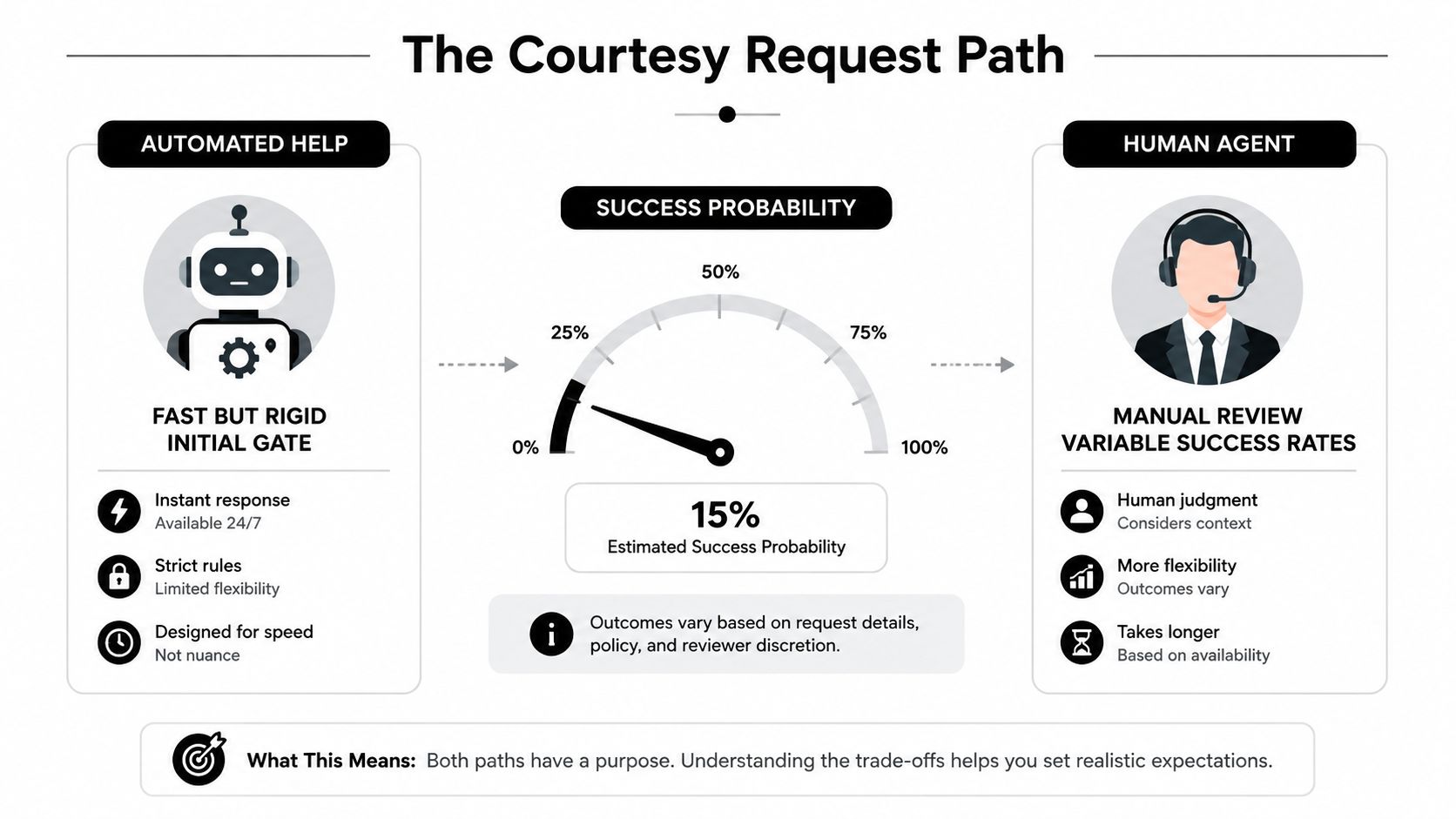
That's why I treat customer service as a low-effort ask, not a strategy.
Chat versus phone
I prefer chat first for one reason. Documentation.
Phone can feel faster when you get a strong rep, but chat gives you a transcript. If the conversation goes well, you've got written proof. If it goes badly, you can end it quickly and move on without wasting more time.
Here's how I think about it:
| Channel | Best use | Downside |
|---|---|---|
| Chat | Clean paper trail, easy copy-paste, low friction | More scripted responses |
| Phone | Better human judgment, faster if rep is helpful | Noisy, inconsistent, harder to document |
The script I'd actually use
Keep it short. Don't argue policy. Don't sound entitled.
Live chat script
Hi, I'm contacting you about order #[order number]. I purchased this item recently, and the exact same product sold by Amazon.com is now listed at a lower price. I understand price adjustments aren't guaranteed. Could you check whether a courtesy refund or account credit is available for this order?
That wording matters. You acknowledge policy. You ask for a courtesy. You don't trap the rep into defending Amazon's rules.
If you call instead, say this:
I'm calling about order #[order number]. The exact same item sold by Amazon.com dropped in price after I purchased it. I know Amazon doesn't guarantee post-purchase price adjustments, but I wanted to ask whether a one-time courtesy credit is possible.
What not to do
Don't threaten a return in the first sentence. Don't paste a long paragraph. Don't mention what some other retailer would do. And don't make up urgency.
Those tactics make reps defensive.
Ask for a courtesy like a rational adult. If the answer is no, decide quickly and move on.
The hidden cost here is time. If you're an operator, your real expense isn't just the refund difference. It's support time, decision fatigue, and the downstream distraction.
So here's my rule. Use the courtesy request once, cleanly, with proof. If denied, stop trying to negotiate. Either cancel before shipment if you still can, or evaluate whether the return-and-rebuy route is worth it.
The Return and Repurchase Workaround
This tactic is eventually employed by many because it works. But it's also the one often evaluated badly.
The return-and-rebuy move is simple. You buy the item again at the lower price, then return the other order if the item is eligible and the economics make sense. Operationally, it's often more reliable than asking support. Financially, it can still be a bad move if you use it carelessly.
Projected U.S. e-commerce return rates were 19.3% of online sales in 2025, Amazon handles roughly 1.2-1.5 billion returned packages annually, and processing a return can cost 20-65% of the item's sale price, according to Karabus on the economics of Amazon's return problem. That same source notes frequent return-and-rebuy behavior can trigger account reviews under Amazon's 10-15% return rate tolerance threshold.
That changes the conversation. The question isn't “Can I do this?” The question is “Should I do this for this item, on this account, at this frequency?”
When it makes sense
I'd use return and rebuy when most of these are true:
- The price gap is meaningful: Not every drop justifies the hassle.
- The item is easy to return: Standard consumer goods are easier than awkward, fragile, or category-sensitive products.
- Your account behavior is clean: If you already return a lot, don't pile on.
- The item condition is straightforward: Unopened items reduce drama.
If the product is cheap, bulky, hard to pack, or likely to create inspection issues, I usually pass.
The risk and reward trade-off
Here's the simplest decision lens:
| Situation | My take |
|---|---|
| Small price drop, low-value item | Ignore it |
| Moderate drop, easy return, low personal return activity | Probably worth it |
| Big drop, item still needed, easy reorder | Strong candidate |
| Frequent use across many orders | Dangerous pattern |
| Seller account already near return tolerance pressure | Bad idea |
Here, entrepreneurs need discipline. A tactic can be individually rational and still become strategically dumb when repeated.
The return-and-rebuy workaround works best as a selective tool, not a standing habit.
My operating rule
I separate buyer behavior from business behavior.
As a buyer, I'll occasionally use return and rebuy on a clean, obvious price swing. As a seller or operator managing account health, I treat every return as a metric event. That means I care about frequency, category sensitivity, and whether the refund dollars are worth the account exposure.
If you're using this tactic often, you don't have a refund strategy. You have a purchasing problem.
That could mean buying at the wrong time, sourcing too aggressively without tracking history, or failing to monitor volatile SKUs before ordering.
Use the workaround when it clearly protects cash. Don't build your workflow around creating avoidable returns.
Playbook for FBA and Arbitrage Sellers
If you source on Amazon for resale, consumer advice won't save you. Your problem isn't one item. Your problem is inventory, velocity, margin compression, and whether a price drop wrecks the spread you thought you had.
For Amazon FBA and arbitrage sellers, unrefunded price drops can erode 20-30% of profit margins on bulk orders. Sellers can also use Seller Central's Request Refund workflow for inbound shipments, with a success rate of around 65% if claimed within 14 days for items sold by Amazon, according to this seller-focused breakdown of Amazon price change refunds.
That's not a side issue. That can wipe out the reason you bought the inventory.
My position on bulk refund tactics
If you're buying inventory at scale, stop acting like a retail shopper.
Your goal is not to win courtesy credits one by one. Your goal is to install process:
- Check inbound orders fast: The refund window for this tactic is tight, so lag kills recoveries.
- Segment Amazon-sold versus third-party sourced inventory: They don't behave the same.
- Track margin at the batch level: One repricing event can distort the whole buy.
- Use refund requests where the platform supports them: Especially on inbound shipments that qualify.
If you're new to sourcing mechanics, this guide on online arbitrage explained gives helpful context on why speed and accuracy matter so much in this model.
What I'd actually do in Seller Central
For inventory bought from Amazon and routed into your operation, check whether the order qualifies for Request Refund as soon as the lower price appears. Don't sit on it. If the item is sold by Amazon and still within that 14-day window, this is one of the few bulk-friendly tactics with real upside.
For third-party sourced inventory, expectations should be lower. Negotiation gets messier, and standard consumer-style outreach doesn't scale.
Here's the practical hierarchy I'd use:
Amazon-sold inventory within the claim window
Highest priority. Here, process can still recover margin.Inbound shipments where paperwork is clean
Good candidate. Documentation matters more than persuasion.Third-party sourced buys
Handle selectively. Don't let your team burn hours chasing weak cases.
Returns policy isn't just a refund issue
FBA operators also need to understand the legal and operational side of returns, especially once inventory starts moving through Amazon's systems and customer returns enter the picture. This guide for FBA inventory returns is worth bookmarking because bad returns handling can create bigger problems than the original price drop.
Margin protection for sellers starts before the refund request. It starts at sourcing, logging, and monitoring every batch that depends on a narrow spread.
My opinion is firm here. If you're an arbitrage seller and you're still handling price drop issues manually from your inbox, you're leaving money on the table and burning operator time. Build a repeatable SOP. Check orders daily. Tag Amazon-sold inventory separately. Escalate only the claims with real margin impact.
Anything else is hobby-level execution.
Proactive Tools to Avoid Chasing Refunds
The best amazon price reduction refund strategy is needing fewer refunds.
That means buying with price history, not with hope. It also means treating dynamic pricing as normal instead of acting surprised when Amazon moves the number after you check out.
Use price trackers before you buy
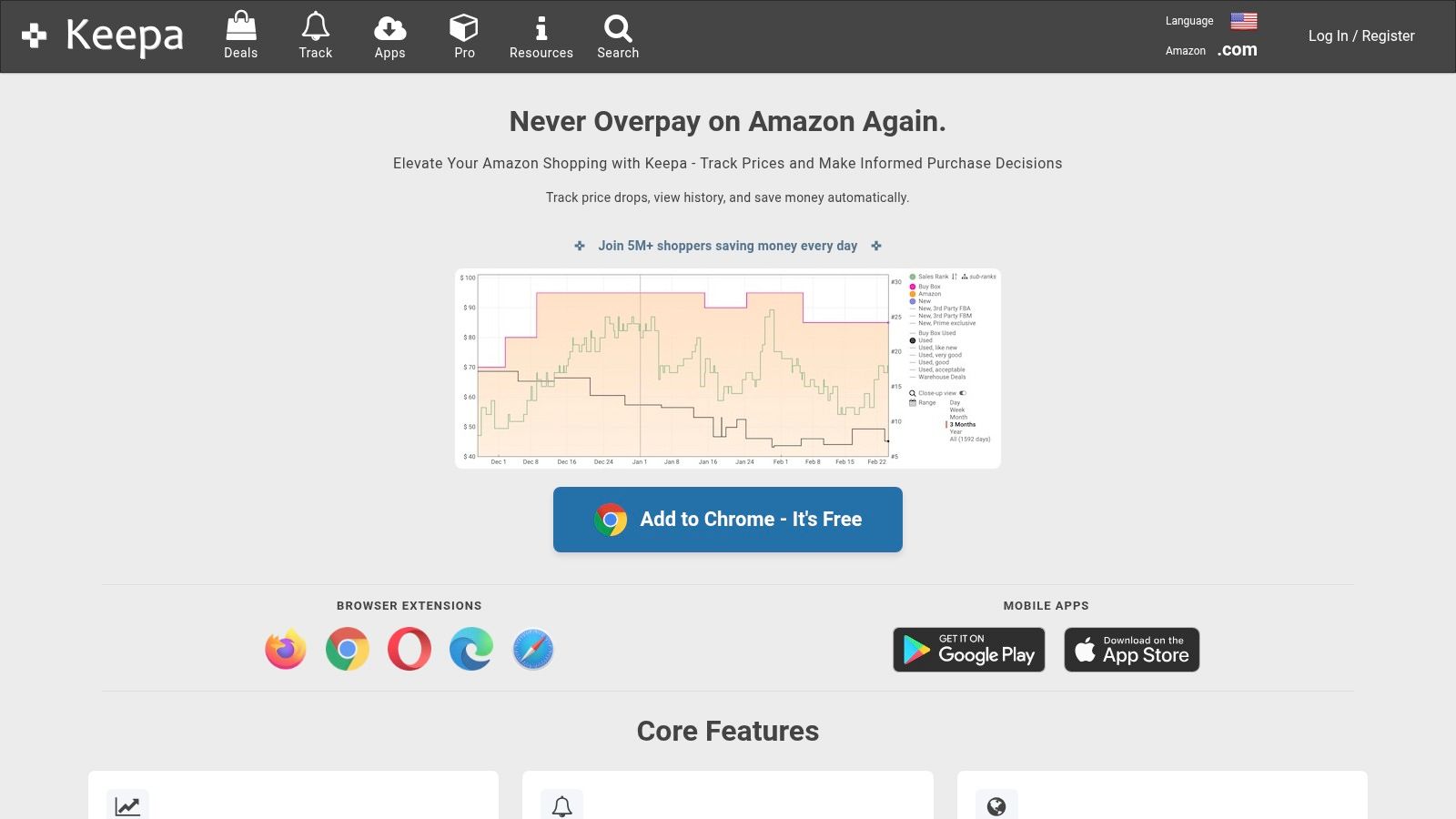
I like Keepa because it gives a fast visual on price history, sales rank movement, and offer behavior. CamelCamelCamel is also useful for basic tracking. The point isn't the tool. The point is seeing whether today's price is stable, higher, or temporarily low.
My simple approach:
- Check the chart first: If the current price is obviously above recent history, wait.
- Set an alert instead of impulse buying: Let the platform notify you.
- Review seller context: A lower price from a random seller isn't the same as a stable Amazon offer.
If repricing is part of your business, this overview of Amazon repricing software is useful because prevention at the pricing layer is far more efficient than refund recovery after the order.
Use your credit card as backup
This gets overlooked. Some credit cards still offer price protection benefits, and when they do, that can be cleaner than fighting with Amazon support or creating unnecessary returns.
The right move is simple:
- Read your card's current benefits guide
- Check whether Amazon purchases qualify
- Save your screenshots and receipt
- File within the issuer's rules
No drama. No account risk with Amazon. No extra return.
Buy with tracking, pay with protection, and you'll spend a lot less time asking Amazon for favors.
My default system
For personal purchases, I check Keepa, set alerts when I'm not in a rush, and use a card with useful purchase protections when available.
For business buying, I go one step further. I review price history before placing inventory orders, and I avoid making margin-sensitive buys on products with unstable pricing unless the spread is strong enough to survive a drop.
That's the ultimate fix. Refunds are recovery. Process is prevention.
If you want more practical operator-first breakdowns on Amazon selling, sourcing, and e-commerce systems, browse the playbooks at EntreResource.