
You probably know the feeling. You publish content, test offers, maybe even get a few sales, but the whole business still feels fragile because your audience lives on platforms you don’t control. One algorithm change cuts your reach. One ad account issue stalls lead flow. One social platform shift forces you to rebuild attention from scratch.
That’s why learning how to build an email list from scratch matters so much. An email list gives you a direct line to people who asked to hear from you. It’s the asset you can keep using whether you run an affiliate site, an Amazon FBA brand, a blog, a course business, or a service.
The mistake I see most often is treating list building like a single tactic. It isn’t. It’s a system. You need the right setup, a real offer, smart capture points, traffic, and ongoing list management. If one piece is weak, the rest underperform.
Why Your Email List is Your Most Valuable Business Asset
A social following is useful. Paid traffic is useful. SEO traffic is useful. None of them give you the same control as an email list.
When someone joins your list, you’re not hoping a platform decides to show your next update. You can reach that person directly. That changes how you launch products, validate ideas, promote affiliate offers, and recover from traffic swings.
For online entrepreneurs, that control is a business stabilizer. If your revenue depends only on Google rankings, social platforms, or ad performance, your business sits on rented land. Your email list is the part you own.
A good list also compounds. Someone might ignore your first email, open your fourth, click your seventh, and buy months later. That long sales cycle is hard to manage on social alone.
One practical example is EntreResource’s newsletter, which has grown to 45,000+ subscribers. That kind of list becomes more than a communication channel. It becomes a distribution engine for content, offers, partnerships, and product feedback. If you want the business case in more depth, this breakdown on how much you can earn with email marketing is worth reading.
What an owned audience changes
Here’s what starts to happen when you build the list first:
- Launches get easier: You don’t start from zero every time you release something.
- Traffic becomes more valuable: A blog visitor who leaves is gone. A visitor who subscribes can come back again and again.
- Testing gets faster: You can ask your audience what they want, then watch replies and clicks.
- Monetization improves: You can match offers to subscriber intent instead of blasting everyone with the same pitch.
Practical rule: Build your list before you think you need it. The best time to start is when your audience is still small.
That’s the mindset shift. Don’t treat the list as a side outcome of content. Treat it as a core business asset that deserves infrastructure, process, and protection.
The Foundational Setup for List Building Success
A lot of email lists go bad before the first campaign ever sends.
The problem usually starts with setup. A founder adds a form, connects the cheapest tool they can find, skips tracking, and starts collecting addresses. Three months later, they have a list they cannot segment cleanly, a sender identity that looks improvised, and no way to tell which subscribers came in with real buying intent. I’ve made that mistake before. Cleaning it up later always costs more than setting it up properly on day one.
Pick an ESP that fits your next stage
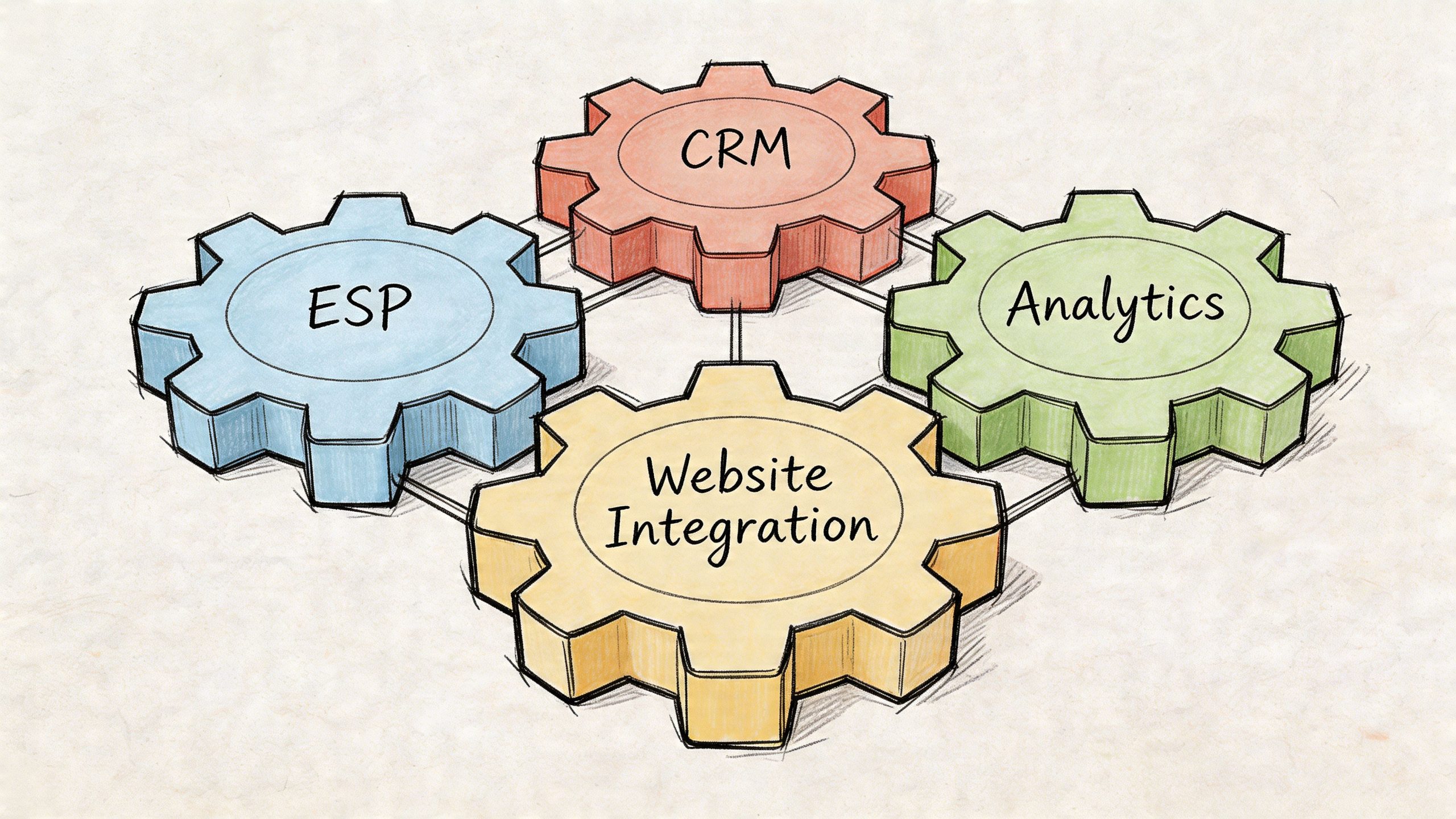
Your email service provider, or ESP, becomes the control center for list growth, automation, segmentation, and cleanup. Mailchimp, MailerLite, Klaviyo, and ActiveCampaign can all do the job. The right pick depends less on popularity and more on the system you plan to build over the next 12 to 18 months.
A simple newsletter business usually does fine with a lighter tool. A business that plans to run multiple lead magnets, behavior-based automations, sales sequences, and product offers should choose for flexibility earlier. Migrating sounds manageable until you have tags, forms, automations, and reporting spread across half a dozen assets.
I look at five things first:
| Decision area | What to look for | Why it matters |
|---|---|---|
| Forms and landing pages | Built-in forms, popups, simple pages | Faster launch and fewer plugin conflicts |
| Segmentation | Tags, custom fields, source tracking | Lets you separate readers, buyers, and cold leads |
| Automation | Welcome flows, conditional logic, triggers | Creates follow-up that scales without manual work |
| Hygiene tools | Bounce handling, inactive segments, suppression | Keeps list quality under control from the start |
| Integrations | Website, ecommerce, CRM, analytics | Prevents messy handoffs between systems |
If you expect inbound subscribers and outbound prospecting to exist side by side, keep those databases separate. Permission-based list building and cold outreach follow different rules, different expectations, and different deliverability risks. For teams handling outbound as part of growth, this guide to building a B2B email database helps clarify the difference.
Use a branded sending identity
Send from a branded address on your domain. That small detail affects trust fast.
A consistent sender name and email address makes your messages feel connected to the business people just subscribed to. It also reduces friction when someone tries to remember who you are a week later in a crowded inbox. I usually prefer a simple format such as a founder name for personality-led brands or a brand name for broader media and ecommerce businesses. Either can work. The key is consistency.
Set this up before traffic starts flowing. It is much easier to build familiarity than to retrain subscribers after changing identities later.
Get consent and tracking right from the beginning
Every subscriber should know what they signed up for and how they got onto the list. That means clear opt-in language, no pre-checked boxes, no scraped contacts, and no mystery imports from old spreadsheets.
Double opt-in is often a smart call, especially for content sites, B2B newsletters, and any brand that cares about long-term deliverability more than inflated subscriber counts. It slows raw growth a little, but the trade-off is cleaner intent and fewer bad addresses entering the system. That is usually a winning trade if you are treating the list like a business asset instead of a vanity metric.
Source tracking matters just as much. Tag whether a subscriber came from a homepage form, a content upgrade, a webinar page, a checkout box, or a referral partner. At EntreResource, this kind of tracking changes how you evaluate list growth. A 500-subscriber source that opens, clicks, and buys is more valuable than a 2,000-subscriber source that never engages. If you want lead magnet ideas that are easier to track and segment by intent, this list of 50 types of lead magnets is a useful starting point.
Set up hygiene before the list gets big
List hygiene is not cleanup work for later. It is part of setup.
A healthy account starts with simple rules: suppress hard bounces automatically, separate engaged readers from inactive subscribers, and create a re-engagement segment before you need it. If someone stops opening for a long stretch, you should know. If a form starts sending low-quality leads, you should be able to spot that source quickly.
That changes the target. Don’t chase the biggest list. Build the cleanest list you can keep active.
A strong starting setup includes:
- Source tagging: Track where each subscriber entered your system.
- Basic engagement segments: Group active readers, new subscribers, and inactive contacts separately.
- Bounce and suppression rules: Remove delivery problems before they hurt future sends.
- Re-engagement logic: Ask inactive subscribers if they still want to hear from you, then suppress the ones who do not respond.
This part is less exciting than designing a lead magnet or writing a welcome sequence. It is still the work that protects future revenue. A list that is easy to segment, audit, and clean will outperform a bigger list held together with guesswork.
Creating Your Irresistible Lead Magnet and Landing Page
A visitor lands on your site, sees “join my newsletter,” and leaves in ten seconds. That is the default outcome when the offer is vague.
People hand over an email address for a clear payoff. They want a shortcut, a template, a calculator, a checklist, or a framework that helps them solve one problem faster. If you treat list building like asset building, this section matters more than it looks. The lead magnet sets the quality of the subscriber. The landing page sets the cost of acquiring them. Get both right and the list becomes easier to monetize, segment, and keep clean over time.
Make the offer narrow, useful, and fast to consume
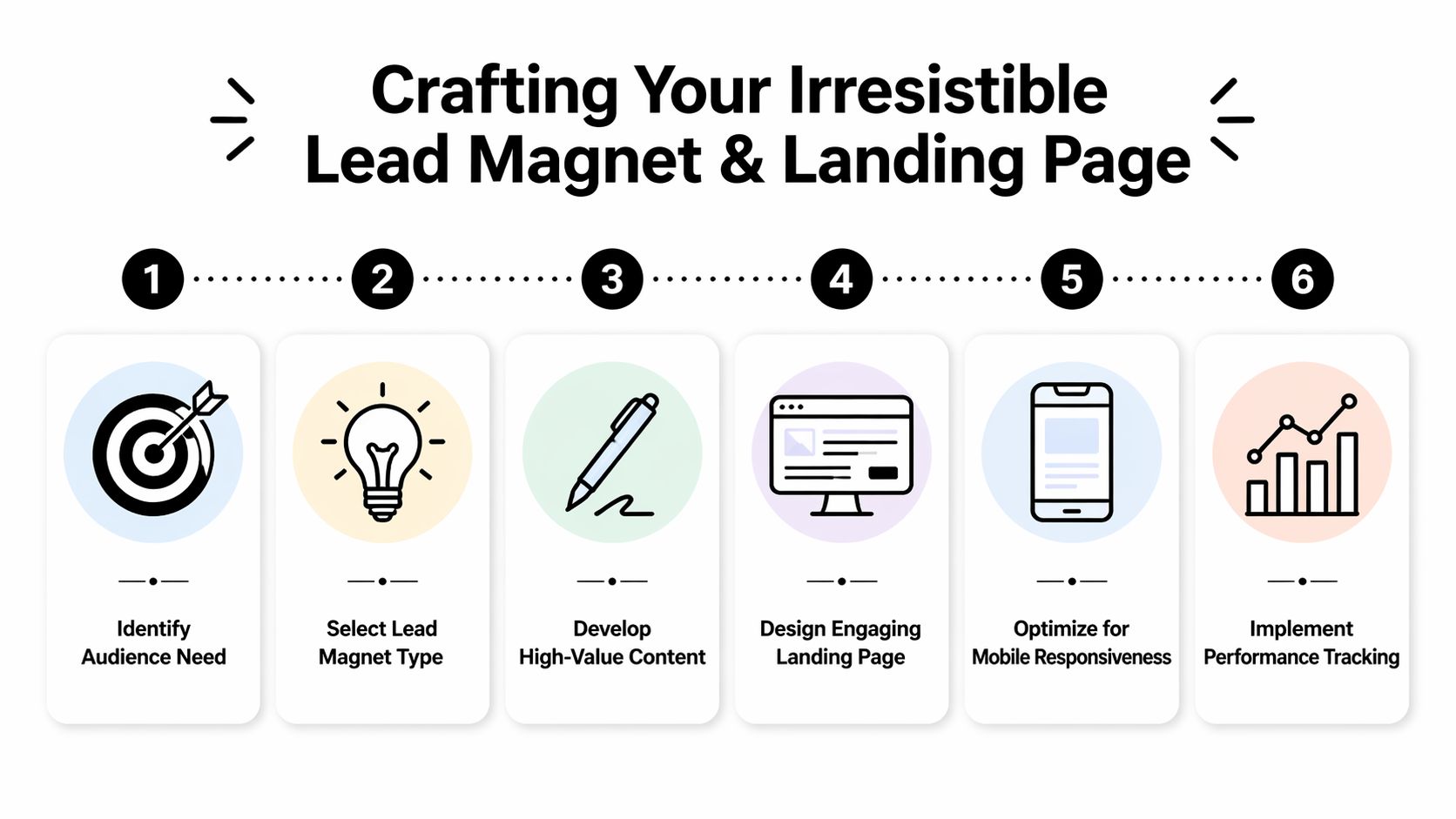
The best lead magnets do three things well. They solve one specific problem. They create a quick win. They feel practical enough to use today.
That rules out a lot of bloated PDFs and generic “ultimate guides.” I’ve tested broad educational offers against focused tools more than once, and the focused version usually attracts better subscribers. Fewer vanity signups. More people who open, click, and buy later.
For this audience, strong examples include:
- A niche site SEO checklist: Better than a broad “SEO guide” because it helps someone execute.
- An Amazon FBA profit calculator: Strong because it helps a buyer pressure-test margins.
- A curated software discount list: Useful when the audience already buys tools regularly.
- A short playbook: Strong if it includes steps, templates, or frameworks someone can apply immediately.
If you need more angles, this list of 50 types of lead magnets is a solid idea bank.
One example that pulls in the right subscriber
Take an Amazon FBA profit calculator.
That offer works because the person opting in already has commercial intent. They are not browsing for inspiration. They are trying to answer real operating questions. Can this product survive fees? What happens if ad costs rise? Does the margin still work if returns tick up?
That is the kind of lead magnet that builds a business asset instead of a bloated list. The subscriber is closer to a decision, easier to segment by intent, and more likely to respond to the emails that follow.
A good lead magnet should read like this:
| Weak offer | Better offer |
|---|---|
| “Join our updates” | “Get the Amazon FBA Profit Calculator” |
| “Free marketing tips” | “Steal our weekly traffic audit template” |
| “Download our ebook” | “Use this checklist before publishing your next affiliate review” |
The landing page has one job
Once the offer is clear, the landing page needs to carry that promise without distractions. Every extra choice lowers focus. Every vague line lowers trust.
A strong page usually includes:
- A sharp headline: Say what they get and why it matters.
- Benefit-driven bullets: Focus on outcomes, not file format or length.
- A simple form: Start with email only unless you have a real reason to ask for more.
- A clear CTA button: Tell them what they are getting.
- No extra navigation: Keep attention on the opt-in.
My rule is simple. If an element does not help the visitor decide, remove it.
I learned this the hard way at EntreResource. Pages that looked “more complete” often converted worse because they tried to explain the whole business instead of selling the next step. A landing page is not a homepage. It is a single-purpose asset inside your list-building system.
Add proof without clutter
Trust matters more with cold visitors, but weak proof can hurt more than no proof at all.
Use proof that supports the specific offer. A short testimonial about the resource, a note that readers use the template weekly, or a credible “used by” line can help. Random praise about your brand usually does not. If you do not have proof yet, keep the page simple and let the usefulness of the offer do the work.
This short walkthrough can help if you want a visual refresher on page structure and offer positioning.
Match the page to how people actually browse
A page that feels clean on desktop can still frustrate mobile visitors. Small text, crowded forms, slow load times, and weak button placement all cut signups. You do not need a stat to see it. Open your page on your own phone and try to subscribe with one thumb. If the process feels annoying, fix that before you buy traffic.
Check these basics before you publish:
- Headline clarity: Can someone understand the offer in a few seconds?
- Form friction: Is the form easy to complete on a phone?
- Button visibility: Is the CTA obvious without zooming in?
- Page speed: Heavy images and scripts often cost real conversions.
- Delivery promise: Tell people exactly where the resource will arrive.
A lot of lead magnets fail because the packaging is weak, not because the idea is bad. Tighten the promise. Clean up the page. Then judge performance. In many cases, that alone improves conversion quality before you touch traffic volume.
Mastering On-Site Subscriber Acquisition
A visitor reads one of your best articles, likes what they see, then leaves without subscribing. That happens every day on sites that publish solid content but treat email capture like an afterthought. If you already earned the click, on-site acquisition is where that attention turns into an owned business asset instead of a one-time session.
I learned this the hard way. At EntreResource, some pages brought in qualified traffic for months before we paired them with the right offer and placement. Traffic looked healthy. List growth did not. Once the capture system matched visitor intent, the same pages started producing subscribers we could nurture, segment, and monetize over time.
The forms that pull their weight
Different form types work at different moments in the visit. One generic box in the footer is not a system.
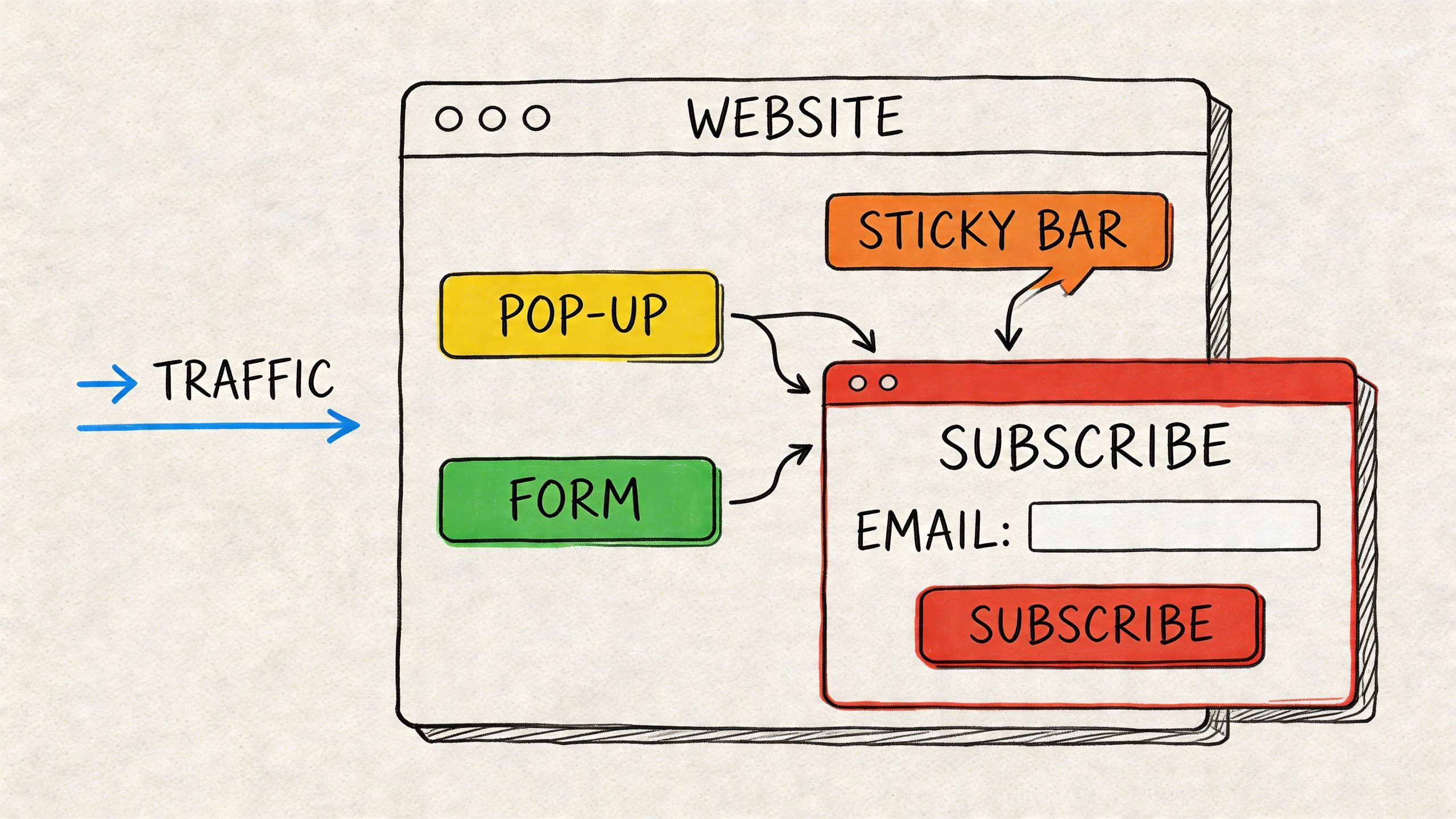
Use placements based on behavior:
- Embedded content forms: Best for article-specific offers that continue the exact topic the visitor is reading.
- Exit-intent popups: Good for recovering abandoning visitors if the offer is specific and the copy is sharp.
- Scroll-triggered boxes: Useful once a reader has shown real engagement.
- Header bars or sticky bars: Best for broad newsletter offers, promotions, or site-wide campaigns.
- Footer forms: Good as a backup option, not the main growth engine.
If your site needs a cleaner setup, this guide on creating an effective newsletter subscription form is a useful reference.
Credibility changes how forms perform
Visitors make a fast trust decision. A form with no context asks for an email address before it has earned confidence.
That is why credibility near the opt-in matters. Use proof you can stand behind. A short line about who the resource is for, a specific result the reader can expect, or a credible customer quote tied to the offer can improve response. If you have a meaningful subscriber count, mention it. If you do not, skip the vanity filler and focus on the usefulness of the offer.
I prefer proof that reduces doubt, not proof that tries too hard. “Get the 7-step product sourcing checklist used in our FBA planning workflow” is stronger than generic praise about your brand.
Put proof beside the form, not three clicks away on a testimonials page.
Relevance beats volume
The highest-performing on-site forms usually feel like the next logical step in the page experience. A visitor reading about SEO should see an SEO template, checklist, or workflow. A visitor reading about Amazon FBA should get an FBA calculator, sourcing sheet, or launch sequence.
That sounds obvious, but a lot of sites still ask every visitor to “join our newsletter” no matter what page they land on. That approach gets names on a list. It rarely gets subscribers who stay engaged and buy later.
Here is a better way to map the ask to the behavior:
| Visitor behavior | Better opt-in move |
|---|---|
| Reading a tutorial | Offer a content upgrade tied to that article |
| Scrolling deeply | Trigger a slide-in with a related lead magnet |
| About to exit | Show one strong popup with one clear CTA |
| Browsing multiple pages | Present a broader newsletter or resource hub offer |
The trade-off is setup time. Targeted forms take more work than a single site-wide popup. They also produce a list with more context, better segmentation potential, and stronger downstream revenue. If you view your email list as a business asset to manage, not a vanity metric to inflate, that extra work pays for itself.
Driving Growth with Off-Site and Paid Acquisition
A founder publishes solid content for months, adds a few forms, and still sees list growth crawl. I have been there. On-site capture helps you collect existing demand, but it does not create new attention. Off-site promotion and paid acquisition solve a different problem. They put your best offer in front of people who would never have found you on their own.
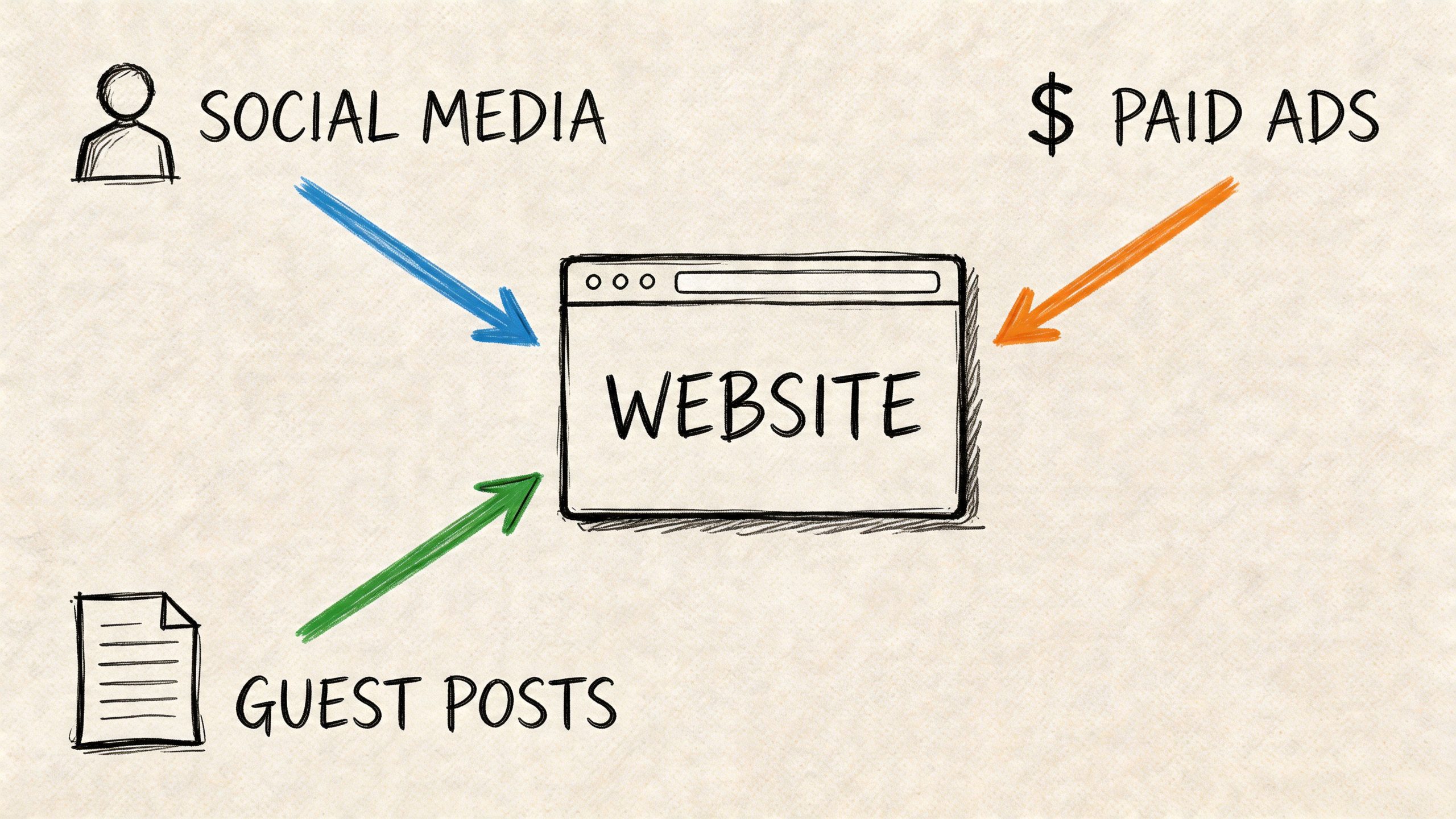
The core decision is not organic versus paid. It is whether you are building a repeatable acquisition system for an asset you can monetize and maintain over time. At EntreResource, that distinction matters. A subscriber from a relevant guest post, podcast mention, or paid lead magnet campaign is not just another email on the list. It is a contact with a source, an intent signal, and a future value you can improve through segmentation and follow-up.
Off-site tactics that bring qualified subscribers
Early off-site growth usually comes from borrowed attention. You use someone else’s audience, platform, or distribution channel, then earn the click with a tightly matched offer.
The channels I would test first are still the most reliable:
- Guest posts: Publish on sites your audience already trusts and point readers to a landing page built for that topic.
- Creator collaborations: Trade value with newsletter operators, YouTubers, or podcast hosts who speak to the same market from a different angle.
- Community participation: Answer specific questions in niche groups, forums, or comment threads. Share your resource only when it directly helps.
- Social posts with a direct CTA: Post one useful idea, then give readers a clear reason to get the full checklist, template, or calculator.
Message match carries this whole section. If someone hears you on a podcast about Amazon margins, send them to an Amazon margin calculator page. If they read your guest article on affiliate SEO, send them to an SEO-specific resource. Broad homepage traffic feels productive, but targeted landing page traffic usually gives you cleaner data, better conversion quality, and stronger segmentation later.
Paid acquisition works after you know your numbers
Paid traffic punishes weak funnels fast. It rewards proven offers.
I do not start with ads to discover whether people care. I use organic and off-site response to identify which topic, promise, and lead magnet already pull their weight. Then I run paid traffic to a page that has shown signs of life. That lowers risk and gives you a clearer read on whether the economics can hold.
The math is simple. If a subscriber is worth more than it costs to acquire them, paid acquisition becomes a controlled input, not a gamble. If you do not know subscriber value yet, start with a small test budget and treat the campaign as research. Track cost per lead, welcome-sequence engagement, and early sales activity by source. That is how a list turns into a managed business asset instead of a vanity count.
What to test first
Keep the first campaign narrow. One audience segment. One lead magnet. One landing page. One conversion goal.
A practical starter setup looks like this:
| Element | Good first choice | Why |
|---|---|---|
| Traffic source | Meta or Google | Broad reach and clear audience or intent targeting |
| Offer | One lead magnet with proven organic response | Cuts down wasted variables |
| Destination | Single-purpose landing page | Keeps the click path focused |
| Primary metric | Cost per lead | Gives you a fast read on acquisition efficiency |
| Follow-up | Welcome sequence with tags by source | Lets you judge lead quality, not just lead volume |
WordStream’s benchmarks for Google Ads show that average conversion rates vary widely by industry, which is exactly why generic ad benchmarks can mislead smaller businesses if the offer is weak or the traffic is poorly matched to the page: https://www.wordstream.com/blog/ws/2016/02/29/google-adwords-industry-benchmarks
That matters more than many founders expect.
A page can convert well with cold traffic if the promise is specific, the opt-in friction is low, and the asset solves one clear problem. But cold traffic also exposes sloppy setup fast. If the ad angle, landing page headline, and lead magnet do not line up, costs climb and subscriber quality drops.
Organic and paid get stronger together
The best list-building systems use both, in sequence.
Organic promotion helps you find the hooks that get attention, the resources people want, and the segments that stay engaged. Paid traffic helps you scale that learning. Off-site partnerships add trust and relevance. Together, they produce more than top-of-funnel volume. They produce cleaner subscriber intent, better tagging, and better downstream revenue visibility.
I have seen founders write off paid acquisition too early because the first campaign sent traffic to a generic page with a weak offer. The channel was not the problem. The system was. When the message, page, and follow-up are aligned, off-site and paid acquisition stop feeling like random promotion and start working like a predictable list growth engine.
How to Nurture, Segment, and Grow Your New List
A subscriber joins your list, grabs the free resource, and then hears nothing useful for two weeks. That list will grow on paper and still produce very little revenue.
What happens after the opt-in determines whether your list becomes a business asset or a bloated database. At EntreResource, the difference usually comes down to three things: a clear welcome, useful segmentation, and regular list hygiene.
Start with a welcome sequence that does real work
A new subscriber should get the promised asset right away, understand what you send, and see a reason to stay subscribed. You do not need an elaborate automation setup to make that happen. You need a short sequence where every email has a job.
I usually start with four or five emails:
Delivery email
Send the lead magnet immediately. Keep the email clean and easy to scan.Orientation email
Explain what kind of advice, offers, or updates the subscriber will get from you.Quick-win email
Teach one tactic, framework, or lesson they can use fast. This sets the tone better than a long brand story.Interest email
Ask what they are trying to solve, or link to a few topic options so you can tag intent.Next-step email
Point them to your best article, tool, product, or low-friction offer.
The trade-off is simple. Short sequences are easier to launch and maintain. Longer sequences can educate more thoroughly, but they also go stale faster and create more cleanup work later. For a new list, shorter usually wins.
If you want a practical companion resource while building this out, Mailadept’s Email List Building guide is a useful reference.
Segment early, even if your setup is simple
Segmentation sounds technical until you reduce it to the basics. Track why someone joined, what they asked for, and whether they still engage.
That alone gives you a much better sending system.
Someone who signed up for an Amazon FBA resource has different intent from someone who joined through an SEO checklist. Sending both people the same emails for months usually lowers clicks, lowers replies, and makes promotions feel less relevant.
A simple tag structure is enough to start:
- Source: popup, landing page, article form, partner mention, checkout
- Topic: SEO, Amazon FBA, affiliate marketing, paid ads
- Stage: lead, customer, repeat customer
- Engagement: active, drifting, inactive
I have seen founders avoid segmentation because they think they need a complicated CRM first. They do not. A few clean tags beat a huge contact list with no context.
Protect list quality before deliverability slips
List growth without list hygiene creates hidden problems. Hard bounces, disengaged subscribers, and low-intent signups make it harder to reach the people who want your emails.
The fix is operational discipline.
Review engagement on a schedule. Run a re-engagement campaign for subscribers who have gone quiet. Suppress or remove the people who still do not respond. That keeps reporting cleaner, improves send performance, and gives you a more honest view of list value.
The metric I care about most is not total subscribers. It is the number of subscribers who still open, click, reply, and buy.
That is the list you can build a business on.
Add referrals after the newsletter earns them
Referral programs can become a strong growth channel, but only after the list already delivers value. A weak newsletter with a referral layer on top just spreads weak results faster.
Morning Brew is one of the best-known examples of newsletter referral growth. The bigger lesson is not the exact numbers. It is the model. They gave readers a product worth sharing, then made sharing rewarding and easy.
That approach works for smaller businesses too, especially if the reward fits the audience.
Start with the basics:
- Give subscribers a personal referral link
- Offer a reward your audience wants
- Ask for the share after subscribers have received a few strong emails
- Watch referral quality so you do not fill the list with junk signups
Treat your list like an asset that needs maintenance, not a counter that needs to go up. That mindset changes how you write emails, how you segment subscribers, and how you judge success. It also leads to a healthier list that keeps producing revenue long after the first opt-in.
Your Action Plan Starting Today
This process works better when you treat it like an operating system, not a one-time campaign. You need a clean foundation, a real lead magnet, focused capture points, traffic sources, and ongoing list care. That’s how to build an email list from scratch without ending up with a bloated, low-value database.
Start smaller than you think. Pick one lead magnet idea. Build one landing page. Add one on-site form. Write one welcome sequence. Then get real traffic to it through one channel.
If you want another practical reference point while you build, Mailadept’s Email List Building guide is a solid companion resource.
Consistency beats overplanning here. Don’t wait until every automation is perfect. Launch the system, watch what subscribers respond to, and improve from there.
If you want a practical benchmark for what a well-run newsletter can become, study how EntreResource has built and served its audience through the Weekly 5 newsletter. Then apply the same principle to your own business. Start within the next 48 hours. One offer. One page. One channel. That’s enough to begin.