

Social media is not a posting channel anymore. It is the front end of brand discovery, trust-building, and customer acquisition.
Your audience moves across multiple apps, multiple content formats, and multiple decision stages before they ever buy. GWI reports that 73% of internet users ages 16 to 64 use social networks to find information about brands and products. That changes the job. Social media marketing tips only matter if they help you build a system that meets people at each of those stages.
That is how I've approached it at EntreResource. Social helps us earn attention, test ideas, grow the email list, and create repeated exposure before a sale. Used well, it does more than generate reach. It creates audience momentum you can carry into offers, partnerships, and owned channels.
These nine strategies work together. One strong content format can increase reach. Better reach sends qualified people into a content funnel. That funnel grows your email list. Research sharpens your content pillars. Repurposing keeps output sustainable. Collaborations widen the top of the funnel. Each part supports the others.
If I were rebuilding from scratch in 2026, I would not treat these as standalone tactics. I would use them as one operating system for social growth, audience ownership, and revenue.
1. Use Platform-Specific Content Formats to Maximize Engagement
Posting the same asset across every platform is one of the fastest ways to flatten reach.
At EntreResource, the gains usually come from adaptation, not duplication. One idea can power a LinkedIn post, a YouTube Short, and a TikTok. The packaging still needs to change because each platform trains users to expect a different pace, tone, and payoff. This first step matters because the rest of the system depends on it. If the content format is wrong, the hook underperforms, the publishing cadence loses momentum, and fewer qualified people ever reach your funnel.
Format shapes performance
Founders often assume a strong idea should travel untouched. In practice, the same message can work on one platform and fail on another because the format asks the audience to consume it differently.
A short founder take filmed vertically might work on TikTok because it gets to the point fast and feels native to the feed. The same clip on YouTube Shorts usually needs a clearer title promise and a tighter payoff. LinkedIn often performs better when that idea becomes a text-led post or carousel with a sharper business takeaway.
If you sound like you're talking to the wrong room, the room moves on.
Practical rule: Start with one core idea. Then rewrite the hook, visuals, and CTA for the platform you're posting on.
Here's the workflow I use when I want output to stay efficient without turning generic:
- Create one source asset: Record a strong long-form video, podcast segment, interview, or direct-to-camera explanation with one clear lesson.
- Rebuild the opening for each channel: TikTok needs immediate curiosity. YouTube Shorts usually need clearer framing. LinkedIn needs context and a stronger point of view.
- Match the format to intent: Educational ideas may work better as carousels on LinkedIn, while personal observations often perform better as short-form video.
- Edit natively when possible: Posts tend to perform better when they look like they were made for that platform, not exported into it.
- Review format-specific analytics: Compare Shorts against Shorts, carousels against carousels, and Reels against Reels. That gives you a cleaner read on what is working.
This also improves repurposing later. A well-structured source asset can feed multiple native executions without feeling recycled.
What adaptation looks like in practice
Say you record a five-minute lesson on lead generation. On YouTube Shorts, you might cut one clip around a search-driven angle. On LinkedIn, you could turn the same point into a carousel on list quality and targeting. On TikTok, you might lead with a stronger opinion and faster delivery. If the topic connects to outreach, you can send interested viewers to a resource on building a quality lead list for cold emailing.
Same idea. Different execution. Better results.
A lot of teams miss this because cloning feels efficient. It is efficient in the narrow sense. It saves editing time. It usually costs reach, watch time, and response quality.
Pick fewer channels. Learn the native format on each one. Then build from there.
2. Build an Email List Through Social Media Content Funnels
Followers are rented. Your list is owned.
That's the biggest shift I'd make early if I were reviewing most brands' social presence. Social platforms are great at discovery, but they control the feed, the rules, and the reach. If you don't move people from attention to ownership, you're rebuilding your audience every month.
At EntreResource, social works best when it points somewhere specific. A newsletter, a lead magnet, a waitlist, a free tool, a workshop. The exact asset matters less than the structure. Social starts the conversation. Email lets you keep it going without algorithm interference.
Turn posts into paths
The mistake is treating every post like a standalone event. Better social media marketing tips are usually about flow. Where does the attention go next? What action should a useful post trigger? What asset turns a casual viewer into a repeat reader?
If you help founders, maybe a short-form clip points to a free checklist. If you serve Amazon sellers, maybe a carousel points to a niche playbook. If you teach outbound, you might send traffic to a resource on how to build a quality lead list for cold emailing.
That funnel doesn't need to be complex. It needs to be intentional.
- Match the lead magnet to the platform: A quick template often converts better from short-form traffic than a long webinar pitch.
- Keep the landing page narrow: One promise, one audience, one action.
- Write platform-specific CTAs: “Comment guide” works differently than “link in bio” or “grab the full breakdown in the description.”
- Use a welcome sequence: Don't collect an email and then go silent. The first few messages shape trust.
Social should do one job well. Earn enough trust to justify the click.
What works better than “join my newsletter”
Specificity beats generic offers every time. “Get weekly growth tactics for affiliate sites” is stronger than “subscribe for updates.” “Download the content calendar I use” is stronger than “learn more in my bio.”
A lot of founders wait until they have huge reach before building an email engine. That's backward. The smaller your audience, the more important ownership becomes. A modest but qualified list is worth more than a large follower count that never leaves the platform.
If your social audience disappeared tomorrow, what would still belong to you? That's the test.
3. Create Data-Driven Content Pillars Based on Audience Research
Bad content calendars usually start with bad inputs.
If the team keeps asking, “What should we post this week?”, the core problem is usually missing audience research. Strong pillars solve that. They give the brand clear territory, make planning faster, and train the audience to associate you with specific outcomes.
At EntreResource, I have to account for adjacent interests without letting the message drift. The same person may care about affiliate marketing, SEO, paid traffic, Amazon FBA, email, and audience growth. If every topic gets equal weight with no structure, the brand starts reading like a general business feed instead of a trusted operator's resource.
Build pillars from buying signals, not brainstorming sessions
Start with questions that show intent.
Comments and DMs are useful, but I put more weight on sales calls, support threads, reply emails, consult requests, and objections that show up before a purchase. Then I compare that against posts that brought qualified traffic, not just broad attention. A post can perform well and still attract the wrong crowd.
Sprout Social's guidance on social media audience research lines up with that approach. The goal is to identify who you want to reach, what they care about, and how they talk about the problem before you build the content system around it.
That distinction matters. Views can tell you what people notice. Revenue signals tell you what they act on.
A practical pillar framework
A practical framework uses three to five pillars, not twelve. That is enough coverage to stay relevant without weakening your positioning.
Here's a structure I've seen hold up across education, service, and creator-led brands:
- Problem pillar: urgent issues your audience wants fixed now
- Process pillar: how you do the work, what you prioritize, and what you ignore
- Proof pillar: results, case examples, failures, and the reasoning behind decisions
- Perspective pillar: opinions, market commentary, and clear points of disagreement
The fourth pillar carries more weight than many founders expect. In crowded markets, your take is part of your value. People do not only follow for information. They follow for judgment.
This also improves repurposing. When you record one strong long-form piece under a clear pillar, it becomes easier to turn it into clips, carousels, and quote posts without losing the core message. That is part of why tools covered in this guide to turning long videos into viral short clips with Opus Clip AI can save time only after the pillar strategy is already clear.
What weak pillars look like
Format is not a pillar. “Reels” is not a pillar. “Podcast clips” is not a pillar.
A pillar is the subject territory you want to own. “Founder systems” works. “Productivity for e-commerce operators” works. “Email monetization for niche publishers” works because it tells the audience what kind of help to expect.
I also would not freeze pillars too early. Run them for a meaningful stretch, review which ones attract the right followers, leads, and conversations, then cut the weak ones. The point is not to cover every topic you could discuss. The point is to build a content system where each pillar strengthens the next one, so the brand becomes easier to recognize, trust, and buy from.
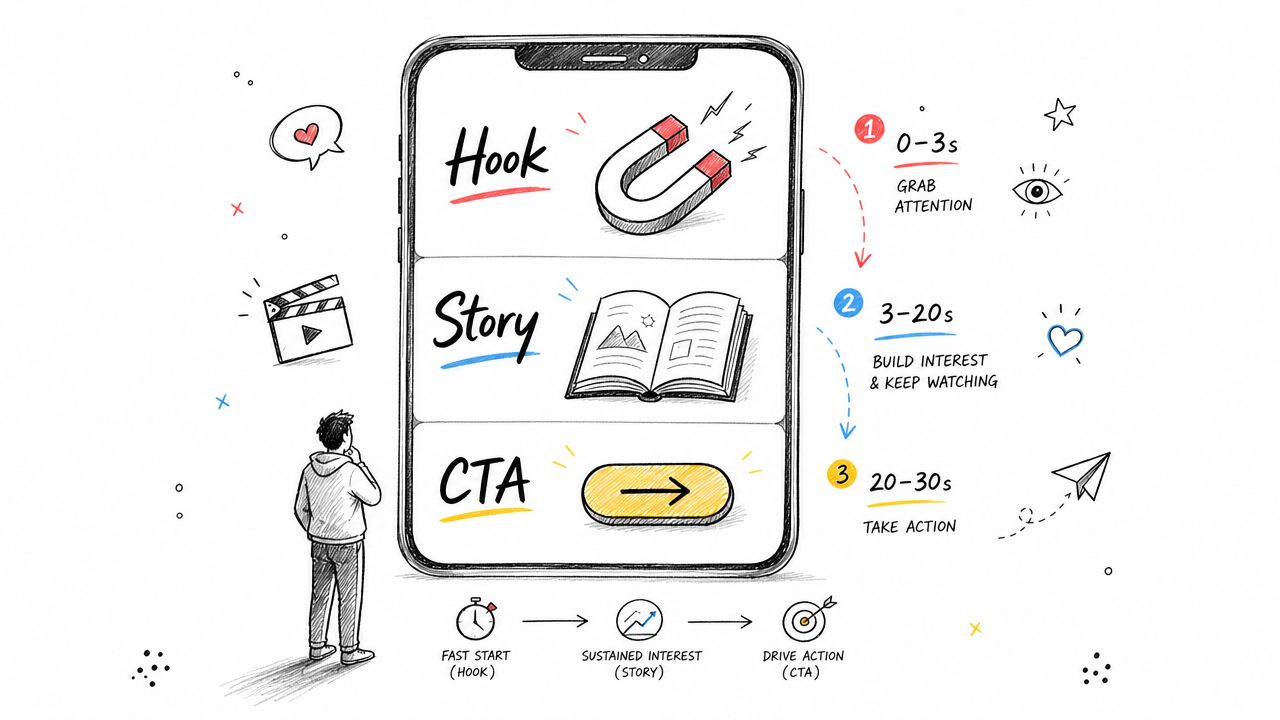
4. Master the Hook-Story-CTA Framework for Short-Form Video
Short-form video punishes rambling. If the opening doesn't earn attention, nothing after it matters.
That's why I still come back to a simple structure. Hook. Story. CTA. Not because it's clever, but because it forces clarity. You stop trying to “make content” and start delivering one idea in a sequence people can follow.
This framework also helps when your team is clipping longer videos. If a segment doesn't have a usable hook, a coherent value section, and a clear next step, it usually won't carry on its own.
A simple visual makes the sequence easier to internalize:
The three parts that matter
The hook has one job. Stop the scroll. That usually means opening with tension, surprise, a bold claim, or a specific problem.
The story section does the heavier lifting. You earn retention by paying off the opening quickly, then moving through the insight with pace. At this stage, most creators lose people because they explain too much, repeat themselves, or delay the point.
The CTA should fit the content. If the clip is educational, maybe the CTA is “get the full system in the newsletter.” If it's opinion-driven, maybe it's “comment if you want part two.” If it's offer-driven, ask for the click.
Don't use a CTA that feels bigger than the value you just delivered.
This is also where smart clipping matters. If you're turning long-form into short-form at scale, tools and workflows can save a lot of manual effort. EntreResource has a solid breakdown of how Opus Clip AI helps creators turn long videos into viral short clips effortlessly.
Practical adjustments that improve retention
A few changes usually help immediately:
- Shorten the setup: If your first sentence needs context to make sense, it's too slow.
- Use tighter overlays: On-screen text should clarify the point, not restate every word.
- Add visual resets: Angle changes, screenshots, captions, and punch-ins keep the clip moving.
- Match CTA to intent: A cold audience usually needs a low-friction next step.
Seeing the framework in action helps more than reading about it. This short video breaks down the structure clearly.
MrBeast uses massive curiosity. Ali Abdaal often uses clean educational tension. My preference is direct business pain. Different style, same structure.
5. Implement a Consistent Publishing Schedule to Build Algorithm Advantage
Consistency matters, but not as commonly understood.
The bad version of consistency is posting because the calendar says so. That fills feeds with forgettable content and burns out the team. The useful version is publishing on a rhythm your audience can trust and your team can sustain.
This matters more as the market gets bigger. Statista projects the worldwide social media advertising market will grow at an 11.86% CAGR from 2026 to 2030, reaching US$530.34 billion by 2030. As more money floods into feeds, operational discipline becomes an advantage. Brands that publish predictably, test quickly, and learn fast are easier to notice and harder to displace.
Cadence is an operations decision
A lot of social media marketing tips focus on “best times to post.” That's not where I'd start.
Start with your production reality. How many good posts can you create every week without lowering quality? How much review friction exists? Who owns editing, approval, scheduling, and response management? If you don't solve those bottlenecks, your cadence will collapse the first time the team gets busy.
A better publishing system usually includes:
- A fixed weekly rhythm: Decide what ships on which days, by platform.
- A content buffer: Keep finished posts in reserve so one bad week doesn't create silence.
- Batch production: Record and edit in blocks instead of resetting every day.
- A review lane: Make approvals fast enough that content doesn't die in draft.
Sustainable beats ambitious
I'd rather see a founder publish three strong posts every week for six months than try a daily sprint for twelve days and disappear.
At EntreResource, consistency works because it's tied to a broader publishing engine. Newsletter, article, clips, and social posts reinforce each other. If your social schedule depends on daily inspiration, it won't last. If it depends on a system, it probably will.
That's the deeper point. Consistency is less about discipline and more about design.
6. Engage Authentically in Community to Build Trust and Reach
Broadcast-only brands feel hollow fast.
People notice when an account posts constantly but never replies, never asks follow-up questions, and never shows signs that a real person is paying attention. Social isn't just a distribution channel. It's one of the few places where trust gets built in public.
That matters commercially. Sprout Social notes that 26% of marketers plan to explore direct selling on social media in 2026, 57% already use TikTok in their strategy, and 32% say it consistently delivers the highest ROI. As more brands try to sell inside platforms, community interaction stops being “nice to have.” If people are going to buy without leaving the app, they need to believe there's substance behind the account.

Response quality matters more than response volume
You don't need to answer every comment with a mini essay. You do need to show signs of attention.
A useful reply does one of three things. It clarifies the original point, extends the conversation, or gives the person a reason to come back. A weak reply just says “thanks” fifty times and calls that community management.
I'd prioritize these moments:
- Early comments on fresh posts: Fast engagement helps momentum and signals there's a human behind the account.
- Questions with buying intent: These deserve real answers, not canned responses.
- Thoughtful dissent: Respectful disagreement is often a chance to demonstrate credibility publicly.
- Community contributions: If someone adds a useful point, spotlight it.
The brands that build trust on social usually sound like participants, not announcers.
What authentic engagement looks like
Ali Abdaal does this well. He doesn't just drop polished content and vanish. Gary Vaynerchuk built a big part of his reputation by replying at scale. Smaller founders can use the same principle without trying to mimic the volume.
Set aside time for community work like you would for content production. If engagement is squeezed into the leftovers of the day, it won't happen consistently. And if it doesn't happen consistently, your audience feels it.
7. Use Authentic Personal Branding to Stand Out in Saturated Niches
Most niches aren't too crowded. Most brands are too forgettable.
If your content sounds like it could've come from anyone in your category, price becomes a bigger factor, trust takes longer to build, and audience loyalty stays weak. Personal branding solves that when it's done authentically. Not with manufactured vulnerability, but with clear perspective, lived experience, and visible decision-making.
This is one reason founder-led content keeps working. People don't just evaluate what you know. They evaluate how you think.
Show your lens, not just your lessons
I'd rather follow someone who explains why they changed their mind than someone who only posts polished summaries after the fact.
At EntreResource, the strongest personal-brand content tends to come from useful specificity. What we tested. What we dropped. What we'd do differently. What trade-off we accepted. That kind of content doesn't just signal expertise. It signals judgment.
A strong personal brand usually includes some mix of:
- Operating philosophy: Your point of view on what works and what wastes time.
- Behind-the-scenes process: How you build, publish, decide, and prioritize.
- Selective transparency: Sharing lessons from failures, not just wins.
- Consistent language: Terms and frameworks your audience starts associating with you.
If you want a deeper look at that process, EntreResource has a practical guide on how to build a successful brand as a social media influencer.
The boundary most people miss
Authenticity doesn't mean posting every private thought online. It means your content feels connected to a real operator with a distinct point of view.
That distinction matters. Audiences can tell when “personal branding” is just imitation with better lighting. Gary Vaynerchuk worked because the intensity was his. Casey Neistat worked because the style matched the person. Your advantage isn't copying their tone. It's making your own perspective legible.
A saturated niche rewards recognizable voices. That's still one of the strongest social media marketing tips for founders who don't want to compete purely on spend.
8. Repurpose Content Across Platforms to Maximize ROI and Reduce Burnout
Repurposing is the difference between building a content system and signing up for a job you cannot sustain.
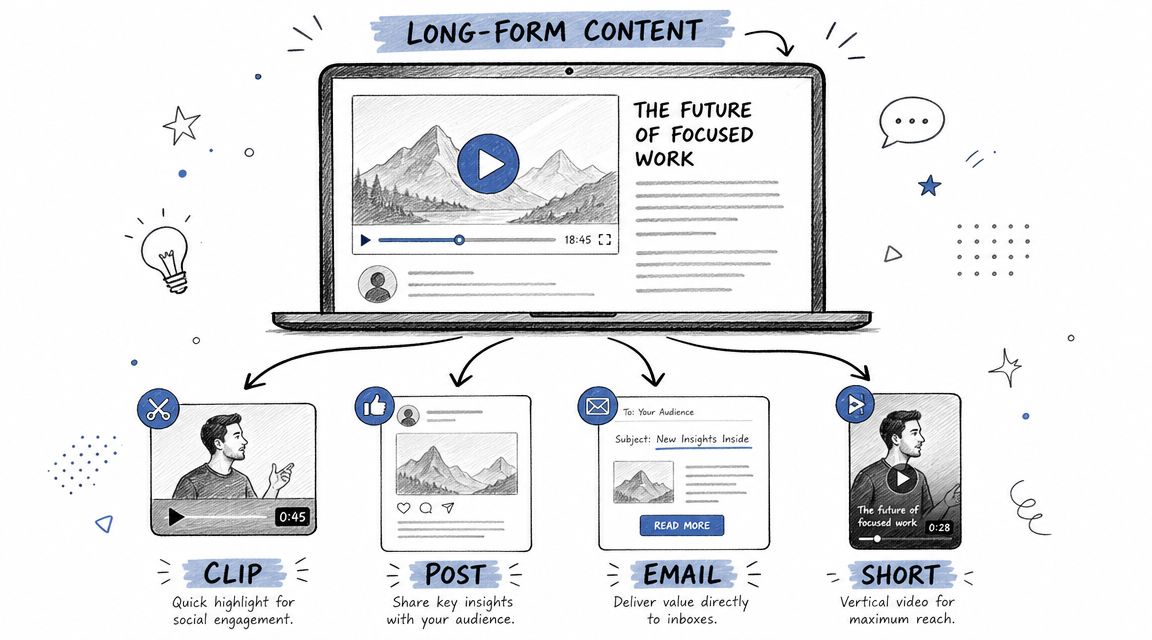
At EntreResource, we rarely start with isolated posts. We start with one strong idea, develop it fully, then distribute it in formats that fit each platform. That approach improves output quality and protects time, which matters because this section only works in combination with the others. Content pillars give you repeatable themes. Platform-specific formatting shapes the asset for the channel. Publishing consistency turns repurposed pieces into compounding reach. Email capture gives the attention somewhere to go.
Build a content tree from one anchor asset
The practical version is simple. Produce one anchor asset each week, then extract multiple assets from it with a clear reason for each one.
An anchor asset might be a long-form video, podcast episode, article, webinar, or newsletter. From there, split it by use case. One section becomes a short-form video hook. Another becomes a carousel. A stronger argument might become a LinkedIn post. A tactical lesson can become an email. The point is not to flood every channel with duplicates. The point is to let one researched idea do more work.
HubSpot's guide to repurposing content across channels makes the same core point. Reuse works best when the original asset has enough depth to support several formats without feeling thin.
Adapt the message, not just the file
A transcript is not a strategy.
A YouTube segment might need tighter pacing for Reels. A good X post often pulls out the sharpest opinion. A carousel usually needs a cleaner teaching sequence. The source idea stays the same, but the packaging changes based on how people consume content on that platform.
That trade-off matters. Pure efficiency pushes teams to copy and paste. Performance usually comes from tailoring the hook, structure, and CTA while keeping the underlying insight intact.
A workflow that keeps quality high
Repurposing falls apart when the recording process ignores distribution. It gets easier when the source asset is built to be sliced later.
- Record in segments: Deliver ideas in clean sections so each part can stand alone.
- Mark strong moments fast: Use timestamps during recording or first review.
- Label clips by purpose: Sort by pain point, audience type, and funnel stage.
- Match format to channel: Turn explanations into carousels, opinions into text posts, and demonstrations into video clips.
- Space out distribution: Let the same idea appear over time instead of posting every variation at once.
- Send people somewhere useful: Point repurposed content back to the full asset, your email list, or the next step in the funnel.
This is one of the few ways to raise output without draining the team.
Protect energy without flattening the brand
Bad repurposing creates repetitive content. Good repurposing creates reinforcement. Your audience sees the same core idea from different angles, in different contexts, at different stages of attention.
That repetition is useful when it is intentional. People rarely buy, subscribe, or reply after one touchpoint. They respond after repeated exposure to a message that stays consistent while the format changes.
Used well, repurposing increases ROI because every strong idea gets a full distribution cycle. It also reduces burnout because the team is refining proven material instead of chasing a brand-new concept every day.
9. Collaborate with Complementary Creators to Expand Reach
Partnerships beat paid reach faster than almost any other channel when the fit is right.
I have seen this repeatedly with EntreResource. A strong collaboration can compress trust-building because the introduction comes through someone the audience already listens to. A weak one does the opposite. It creates a short spike in impressions, low follow-through, and an audience that never converts because the match was wrong from the start.
That matters even more in a crowded market where bigger brands can buy more visibility. Smaller companies usually win by entering existing trust networks with a message that fits the room.
Choose adjacency, not duplication
The best creator partnerships sit one category over from your offer.
If you help affiliate marketers, a useful partner might teach SEO, YouTube production, or creator monetization. If you serve e-commerce founders, look for someone focused on logistics, sourcing, or paid acquisition. The audience should share problems, but the products should not cancel each other out.
That is the filter.
A good collaboration answers one question fast: why does this improve the experience for both audiences?
Borrowed trust works best when the fit is obvious to the audience without explanation.
Set the operating plan before you hit publish
Good collaborations are built before they are recorded.
Agree on the format, the goal, the CTA, and the distribution plan upfront. If one creator wants newsletter subscribers and the other wants product trials, the content usually feels split. If both sides agree on the outcome, the conversation gets sharper and the promotion feels natural.
I usually sort collaborations into four buckets:
- Guest clips or interviews: Best for authority and first-touch audience crossover.
- Co-hosted live sessions: Strong when both audiences ask questions and want practical answers.
- Newsletter swaps: Effective when the audience fit is tight and trust is already high.
- Short content series: Better than a one-off post when you want recall, not just reach.
The format should match the goal. An interview can introduce expertise. A three-part series can move people toward action.
Judge collaborations by downstream results
Reach is the easy metric. Qualified attention is harder, and it matters more.
A collaboration worked if it brought the right followers, email subscribers, replies, calls, or sales conversations. If it only produced vanity engagement, the partner may have had audience size but not audience alignment. I would rather do three small partnerships with precise fit than one large one with broad but weak interest.
Pat Flynn has used this approach well for years. The conversations feel useful first and promotional second. That is the standard. The audience should come away with a better idea, a clearer next step, and a reason to keep following both creators.
9-Point Social Media Tips Comparison
| Strategy | 🔄 Implementation complexity | ⚡ Resource requirements | ⭐📊 Expected outcomes | 💡 Ideal use cases | Key advantages |
|---|---|---|---|---|---|
| Leverage Platform‑Specific Content Formats to Maximize Engagement | Moderate–High: needs platform knowledge & editing workflows | Medium: time for native edits, analytics tools, small team | Higher organic reach & retention; better algorithm alignment (⭐⭐⭐) | Multi‑channel creators aiming to boost reach and watch‑time | Platform‑native optimization → improved retention and authenticity |
| Build an Email List Through Social Media Content Funnels | Medium: requires funnel setup and tracking | Medium: landing pages, email platform fees, lead magnets | Strong long‑term ROI and owned audience growth (⭐⭐⭐⭐ 📊) | Creators/businesses prioritizing monetization and launch funnels | Converts ephemeral followers into owned, segmentable assets |
| Create Data‑Driven Content Pillars Based on Audience Research | Medium: 2–4 weeks research + ongoing listening | Medium: social listening tools, surveys, analysis time | More relevant content, authority and steady traffic (⭐⭐⭐) | Strategy-first creators who need consistent topical focus | Reduces randomness; improves relevance and topical authority |
| Master the Hook‑Story‑CTA Framework for Short‑Form Video | Low–Medium: learnable framework but requires testing | Low–Medium: filming/editing time, iterative testing | Stronger retention and conversion on short videos (⭐⭐⭐⭐) | Short‑form creators seeking predictable virality & CTR | Predictable structure for batching and improved completion rates |
| Implement a Consistent Publishing Schedule to Build Algorithm Advantage | Low: process & discipline to maintain cadence | Medium: batch creation time, scheduling tools | Improved algorithm favorability and audience habit formation (⭐⭐⭐) | Any creator scaling sustainably over time | Consistency compounds engagement and reduces creator fatigue |
| Engage Authentically in Community to Build Trust and Reach | Low–Medium: ongoing daily practice and moderation | Medium–High: time-intensive; may need community manager | Higher trust, advocacy, and conversion from followers (⭐⭐⭐⭐) | Brands/creators focused on retention and customer lifetime value | Builds loyalty, generates content ideas, increases recommendations |
| Use Authentic Personal Branding to Stand Out in Saturated Niches | Medium: requires vulnerability and sustained authenticity | Low–Medium: regular storytelling, time investment | Deeper emotional connection and long‑term audience stickiness (⭐⭐⭐⭐) | Creators in crowded niches needing differentiation | Differentiation through personality → higher loyalty & conversions |
| Repurpose Content Across Platforms to Maximize ROI and Reduce Burnout | Medium: systemization and templates required | Medium: editing tools, VA/editor, scheduling | Multiplies reach per asset and improves efficiency (⭐⭐⭐) | Long‑form creators who want to scale output efficiently | One long piece → many assets; lowers marginal production cost |
| Collaborate with Complementary Creators to Exponentially Expand Reach | Medium: outreach, coordination, and clear agreements | Low–Medium: time to find partners; shared production effort | Rapid audience growth and credibility transfer (⭐⭐⭐⭐ 📊) | Growth campaigns, launches, and networked audience expansion | Exponential reach with low cash outlay; shared resources and credibility |
Your Next Move From Tips to Action
Social media tips do not build a company. Systems do.
Founders get poor results from social because they treat it like a string of separate tasks instead of one operating system. They post for a few days, disappear for two weeks, test a lead magnet with no funnel behind it, then wonder why the effort never compounds. Short-form has no source asset behind it. Engagement has no next step attached to it. The work stays busy, but the business stays flat.
At EntreResource, these nine strategies work because each one strengthens the next. Platform-specific content improves response. Content pillars keep ideas focused. Hook-story-CTA gives short-form structure. Consistent publishing gives the algorithm more to work with. Community participation builds trust. Personal branding makes the message recognizable. Repurposing increases output without increasing exhaustion. Collaborations expand distribution. Email converts rented attention into an audience you own.
That last piece changes how the whole system performs.
A healthy social presence should produce more than reach and comments. It should create qualified traffic, leads, conversations, and repeat attention you can bring back later. As noted earlier, broader strategy discussions from AMA make the same point. Surface engagement can look strong while the business result stays weak. I have seen brands celebrate views on posts that never generated a subscriber, buyer, or booked call.
The same goes for channel selection. Chasing every platform spreads the team thin and usually lowers quality everywhere. As noted earlier, strategy analysis from Sprout Social also reflects this shift toward more selective investment. In practice, the better move is usually concentration. Pick the channels that match your format, buyer, and sales process, then build depth before expanding.
Start with the bottleneck.
If content feels scattered, fix the pillars. If attention is coming in but nothing is being captured, build the email funnel. If production is eating the team alive, set up repurposing before adding another platform. If posts get views but no credibility, spend more time replying, explaining decisions, and showing how you work.
Run that fix for 30 days and judge it by business traction, not by whether one post spikes. The right question is whether the system got stronger, easier to run, and more connected to revenue.
That is the shift that matters. Social stops draining time when it starts serving the business like infrastructure, not entertainment.