
If you're a content creator, you've almost certainly considered affiliate marketing. And when you think of big-name retailers, Target is right at the top of the list. The Target affiliate program, which they officially call Target Partners, is your ticket to earning commissions from one of America’s most beloved brands.
It’s a straightforward, performance-based deal: you promote products your audience already knows and loves, and you get a cut of any sales that come through your unique affiliate links.
For a quick overview, here are the essential details of the program at a glance.
Target Affiliate Program At a Glance
| Key Feature | Details |
|---|---|
| Official Program Name | Target Partners |
| Commission Rate | Up to 8%, depending on the product category |
| Cookie Duration | 7 days |
| Affiliate Network | Impact Radius |
| Payment Threshold | $10 |
| Primary Niches | Home Goods, Apparel, Baby & Kids, Electronics, Health & Beauty |
This table gives you the high-level summary, but the real value comes from understanding how these pieces fit together to help you actually make money.
What Is the Target Affiliate Program
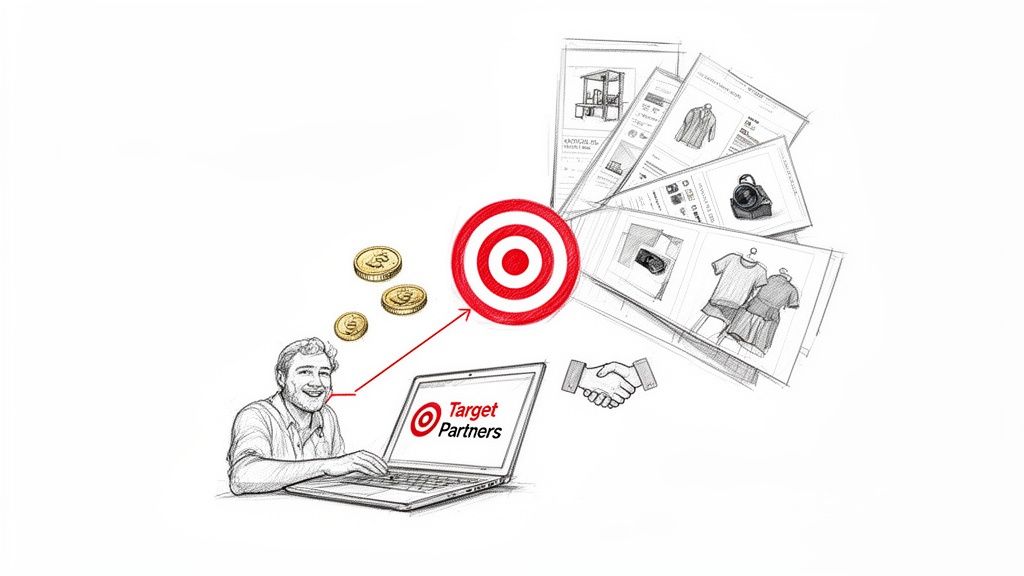
Think of the Target affiliate program as a digital handshake with the iconic bullseye brand. You're essentially becoming a commission-based salesperson, but instead of cold-calling, you're recommending products to an audience that already trusts you.
When one of your followers clicks your link and buys something, Target gives you a piece of the sale. It’s a powerful way for bloggers, YouTubers, and social media influencers to turn their content into a real income stream. Instead of just talking about your favorite home decor finds or the latest tech gadgets from Target, you can actually earn from those recommendations.
How Target Partners Operates
The entire program runs on Impact Radius, a major affiliate marketing network. Impact acts as the middleman, handling all the nitty-gritty backend stuff so you don't have to.
From your Impact dashboard, you can:
- Grab unique, trackable affiliate links for any product on Target.com.
- Check out detailed reports on your clicks, sales, and earnings.
- See what’s working (and what’s not) to fine-tune your strategy.
- Manage your payments and find promotional materials.
Running the program through a well-known network like Impact is a huge plus. It adds a layer of reliability and keeps all your tracking and payments organized in one place, which makes life a lot easier.
At its core, affiliate marketing is about trust. The Target affiliate program works best when you already have an audience that values your opinion on products related to home, family, style, and electronics—all core strengths of the Target brand.
The Opportunity in Affiliate Marketing
Affiliate marketing isn't some tiny niche; it's a massive and growing industry. The global market was valued at $18.5 billion in 2024 and is on track to blow past $20 billion by 2026. With affiliate programs driving a whopping 16% of all e-commerce sales, getting in with a major player like Target is a solid move for scaling an online business. You can dig deeper into affiliate marketing industry growth insights on Strackr.com.
For anyone with an established audience, partnering with a household name like Target is a clear path to generating revenue. The brand’s product catalog is enormous—spanning everything from groceries and clothes to furniture and baby gear. This means you can almost always find something relevant to promote, no matter what your niche is. Honestly, that versatility is one of the most compelling things about the program.
How Target's Commissions and Cookie Duration Work
Alright, let's talk about how you actually get paid. Understanding the commission structure and cookie window is where the rubber meets the road. These two things will make or break your earning potential with the Target affiliate program.
Target doesn't pay a flat rate on every sale. Instead, your earnings depend entirely on what your audience buys. The rates can swing from as low as 1% on some product categories all the way up to 8% on others. This means your promotion strategy is everything.
A Closer Look at Commission Rates
Since Target’s inventory is massive, you have to be smart about what you promote. Pushing the right categories is the key to making real money here.
Here’s a rough idea of where the money is:
- Top Tier (Up to 8%): This is where you'll find categories like Apparel & Accessories, Home & Outdoor Living, and Baby Gear & Furniture. These are the goldmines. Promoting a new patio set or a back-to-school wardrobe can really pay off.
- Mid-Tier (3-5%): Health & Beauty products usually land in this range. It's a solid middle ground, especially for lifestyle bloggers.
- Low-Tier (1%): Unfortunately, this is where you’ll find some of the most popular items like Electronics, Video Games, and Toys. You can still make money here, but you need to drive some serious volume.
Let's put that in perspective. If you sell a $1,000 patio set from the Home & Outdoor Living category, an 8% commission gets you a sweet $80. But if you sell a $500 gaming console from the Electronics category, that 1% commission only lands you $5. See the difference? It pays to be picky.
The Power of the 7-Day Cookie Duration
Now for the good stuff. The commission rates are important, but the cookie duration is what makes Target’s program so compelling. They give you a 7-day cookie window, which is a huge advantage.
Think of it as giving your reader a week-long shopping pass with your name on it. When someone clicks your affiliate link, a small tracking file (a "cookie") is stored on their browser. If they buy anything from Target.com within the next seven days, you get the commission. It doesn't even have to be the product you recommended.
A longer cookie window directly boosts your earning potential by catching sales from shoppers who take their time. This is a game-changer for big-ticket items that people think about for a few days, like furniture or appliances.
This generous timeframe is a world away from what some other big players offer. Amazon Associates, for example, is famous for its 24-hour cookie. With Target, your referral gets a whole week to browse, fill their cart, and finally check out, and you still get paid. Honestly, knowing how to choose a program based on cookie duration and payout is a fundamental skill for any serious affiliate.
This extended window fits modern shopping habits perfectly. People browse on their phone during their lunch break and then buy on their laptop a few days later. That 7-day buffer gives those sales time to close.
The opportunity here is massive, and it's only getting bigger. U.S. affiliate marketing spending shot up to $10.72 billion in 2024 and is expected to hit $13.20 billion by 2026. This isn't some fringe marketing channel; 81% of brands now use affiliate programs to drive sales. You can dig into more of the data in these affiliate marketing statistics on Fintel Connect.
Success with Target comes down to mastering these two pillars. You need to combine smart promotions in high-commission categories with the power of that generous 7-day cookie. Get that right, and you can build a very reliable income stream.
Your Step-by-Step Guide to Joining Target Partners
Ready to team up with the bullseye brand? This is your no-fluff roadmap for getting into the Target affiliate program, which they officially call Target Partners. We'll walk through the entire sign-up process on the Impact network, breaking it down into simple steps you can follow right now.
Setting Up Your Account on Impact
Before you can even think about applying to Target Partners, you need an account with Impact. This is the affiliate network that manages their program. If you’re already an Impact member, you can just search for Target and skip this part. But for everyone else, this is square one.
Think of Impact as the command center for your affiliate business. It's where you’ll find brands to partner with, grab your unique links, and track how much money you’re making. The sign-up process is pretty standard—you'll fill out some info about yourself and your main promotional channel, which for most of us is our blog or website.
The single biggest hurdle to getting approved is the quality of your website. Before you even start an application, make sure your site looks professional, is a breeze to navigate, and actually gives visitors something valuable. A site that looks half-baked or has barely any content is the fastest way to get rejected.
Finding and Applying to the Target Partners Program
Once you're set up on Impact, it's time to hunt down Target. Log into your dashboard, head over to the "Brands" tab, and click "Find Brands." Just type "Target" into the search bar, and the Target Partners program will pop right up.
Here's where you'll make your case directly to Target's affiliate team. The application asks how you plan to promote their products. My advice? Be specific and treat it like a job interview.
- Detail Your Promotional Strategy: Don't just say you'll use a blog. Explain how. Will you write in-depth product reviews, create holiday gift guides, or produce unboxing videos on YouTube? Paint a clear picture of your content plan.
- Showcase Your Audience: Briefly explain who reads your blog and why they'd be a perfect fit for Target. Something like, "My audience is primarily new moms looking for affordable baby gear and stylish home decor" works great.
- Check Your Compliance: Before you hit submit, make sure you have a privacy policy and an affiliate disclosure statement clearly visible on your site. This isn't just a suggestion—it's a must-have for any serious affiliate program.
The whole process boils down to this simple flow:
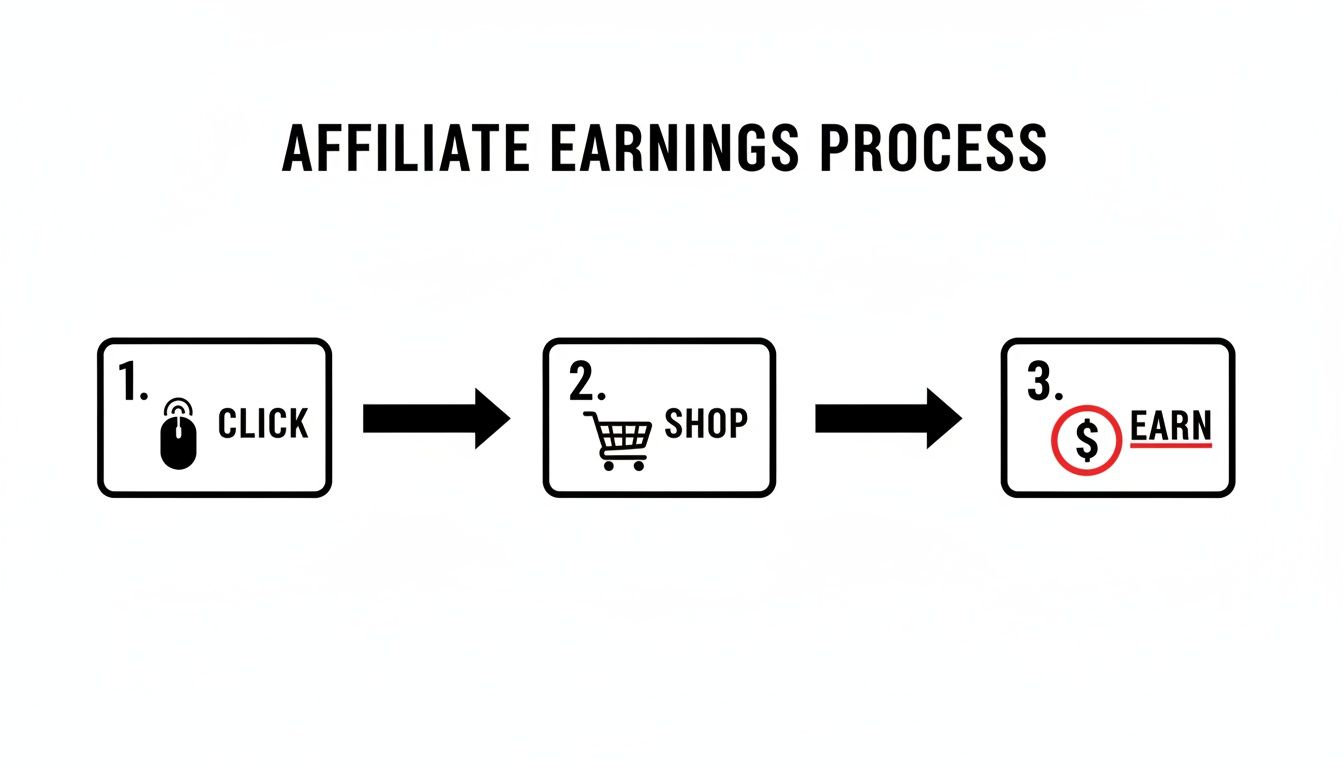
It really is that straightforward. Your audience clicks your affiliate link, shops on Target.com, and you get a cut of whatever they buy.
Common Mistakes That Get Applications Rejected
A lot of hopeful affiliates get turned down because of simple, avoidable mistakes. Learn from them so you don't make the same ones.
First, don't apply with a brand-new website that's basically empty. Target wants to see an established platform with a track record of creating useful content.
Second, put some real effort into your application. A lazy, one-sentence answer like "I'll post links on my blog" won't cut it. Explain the how and the why. A good application shows them you've thought this through. If you're looking for what brands want to see, it can be helpful to see how other programs operate. Our guide on the top PartnerStack affiliate programs can offer some good insights.
Finally, make sure your website's vibe matches Target's brand. A site cluttered with spammy ads or thin, low-quality articles is an immediate red flag. Your site should be a place where Target would be proud to see its products. After you apply, just be patient. The review can take a few days, but a solid, professional application gives you the best shot at getting that approval email.
Understanding the Program Rules and Restrictions
Alright, let's talk about the rules. Joining the Target affiliate program is exciting, but you need to know the guidelines to build a lasting, profitable relationship. This isn't about getting bogged down in legal jargon; it's about understanding the simple dos and don'ts that'll keep your account safe and your commissions rolling in.
Honestly, a lot of new affiliates get this part wrong. They get excited, start promoting, and accidentally break a rule that gets them kicked out. Don't be that person. A few minutes of understanding the rules now will save you a massive headache later.
Core Promotional Guidelines
Like any big retailer, Target is serious about protecting its brand. The rules they have in place aren't there to make your life harder; they're there to keep things fair and consistent for everyone. The biggest one you need to know about involves paid ads.
You are strictly forbidden from bidding on any keywords in Pay-Per-Click (PPC) campaigns that include the Target brand name or any typos or variations. This is a non-negotiable, instant-ban kind of offense. These terms include:
- "Target"
- "Target.com"
- "Target coupons"
- "Target deals"
Target wants their own ads showing up when people search for them directly. They don't want to compete with their own affiliate partners for that traffic.
The core idea is simple: drive your own traffic to your own content, and then send that traffic to Target. Don't try to intercept customers who are already searching for Target directly.
You can, of course, use the Target name in your content (like "My Top 10 Target Home Decor Picks"). Just make sure it’s clear your site is your own and you're not an official part of the company.
FTC Disclosures Are Mandatory
This one is a big deal, and not just for Target. The Federal Trade Commission (FTC) requires you to be transparent with your audience about your affiliate relationships. Plain and simple, you have to tell people you might get paid if they buy something through your links.
This disclosure needs to be "clear and conspicuous," which basically means it should be near the top of any page or post with affiliate links. Something straightforward like, "This post contains affiliate links, and we may earn a small commission if you make a purchase," usually does the trick.
Products Excluded from Commissions
Here's something that trips up a lot of new affiliates: not everything on Target.com will earn you a commission. It's crucial to know what's excluded so you don't waste time promoting products that won't pay out.
The list can change, but some common exclusions are:
- Gift cards and prepaid cards
- Certain high-demand electronics and video game consoles (think the newest PlayStation or Xbox)
- Pharmacy and clinic services
- Target Cafe and Starbucks purchases
Always double-check the latest program terms on Impact for the most current list of non-commissionable items. It's a quick step that ensures you're focusing your energy on what actually makes you money.
With 81% of advertisers now running affiliate programs, playing by the rules is more important than ever. While everyone knows Amazon Associates, Target is a fantastic alternative, especially for those who learn and respect the guidelines. You can check out more affiliate marketing statistics and compliance data if you want to geek out on the industry landscape. Following these rules isn't just about avoiding trouble; it's how you build a real, sustainable business with a major brand like Target.
Alright, you’re in the Target affiliate program. That’s the easy part. Now comes the real work: turning those affiliate links into actual cash.
Just sprinkling random Target links across your site won't cut it. The affiliates who are actually making a living from this have a strategy. They build a content engine that pulls people in and convinces them to click "buy."
Let's break down the methods that actually work. I've used these myself, and they're the difference between making a few bucks and making a few thousand.
Go Deep with Product Reviews and Comparisons
If you want to build trust, you need to write honest, detailed product reviews. This is probably the single most powerful tool in your affiliate toolkit. Your audience follows you for your real-world takes, not a sales pitch.
Don't just list the features from the product page. Show the product in real life. If you're reviewing a bookshelf from Target’s Threshold line, film yourself putting it together. Talk about how the finish holds up after a month. Show how it actually looks in a cluttered, lived-in room, not just a sterile product photo.
Even better, pit products against each other. Think about what a real shopper would be debating. A post titled "Target's Good & Gather vs. Whole Foods' 365: Which Pantry Staples Are Worth It?" is an instant click for someone trying to save money on groceries. You become the helpful friend giving insider advice, and that’s who people buy from.
Build a Niche Site Around the Big Money Categories
Want to make the most of your effort? Go where the money is. The best commission rates in the Target program are in categories like Apparel & Accessories and Home & Outdoor Living, which can hit up to 8%.
The smartest way to tackle this is by building a niche site—a blog dedicated to a super-specific topic. This lets you become the go-to expert in a profitable area. Imagine a whole site about "Affordable Dorm Room Decor" or "First-Time Mom Must-Haves."
Every single article becomes a natural home for Target links. A post on "10 Ways to Make Your Apartment Patio Feel Like a Resort" can seamlessly link to Target’s outdoor rugs, string lights, and planters. This focused approach builds a dedicated audience that trusts your recommendations and is ready to shop. Knowing how to choose the best affiliate offers for your specific audience is a skill that separates the pros from the amateurs.
Ride the Wave of Seasonal Sales and Holidays
Target's entire year is planned around major shopping events. This is a gift for affiliates. When spending spikes, you should be right there to catch the wave.
Think like a retailer. Get your content calendar lined up with major shopping seasons. You have to be talking about what people are getting ready to buy, right when they're ready to buy it. It’s that simple.
Start planning your gift guides and sale roundups weeks in advance. This gives Google time to find your content and puts you in a prime position when the shopping frenzy starts.
- Back to College: Think dorm room essentials, budget-friendly tech, and easy-to-pack clothing.
- Holiday Season: Go all out with gift guides. "Top Tech Gifts Under $50" or "Cozy Gifts for the Homebody" are always winners.
- Summer: This is your time to promote patio furniture, swimwear, grilling gear, and anything related to outdoor fun.
Use Social Media and Video to Drive Traffic
Your blog is your home base, but social media is where you build the day-to-day relationship with your audience. You don't have to be on every platform, just the ones that make sense for your content.
Here are a few tactics that have a huge ROI for Target affiliates:
High-Conversion Promotion Strategies for Target Affiliates
I've found that a mix of strategies works best. You need your core content on your blog, but you also need to meet people where they're scrolling every day. Here’s a quick breakdown of what to focus on.
| Strategy | Best For | Effort Level | Potential ROI |
|---|---|---|---|
| In-Depth Blog Reviews | Building authority and ranking in search engines for high-intent keywords. | High | High |
| Niche "Best Of" Lists | Capturing shoppers looking for curated recommendations and comparisons. | Medium | High |
| YouTube "Target Haul" Videos | Engaging a visual audience and showing products in a real, unscripted way. | Medium | High |
| Pinterest Idea Pins | Inspiring users with lifestyle content (decor, fashion, recipes) that links back to your blog. | Low | Medium |
| Instagram Reels/Stories | Quick, interactive content like "Shop With Me" trips or styling Target finds. | Low | Medium |
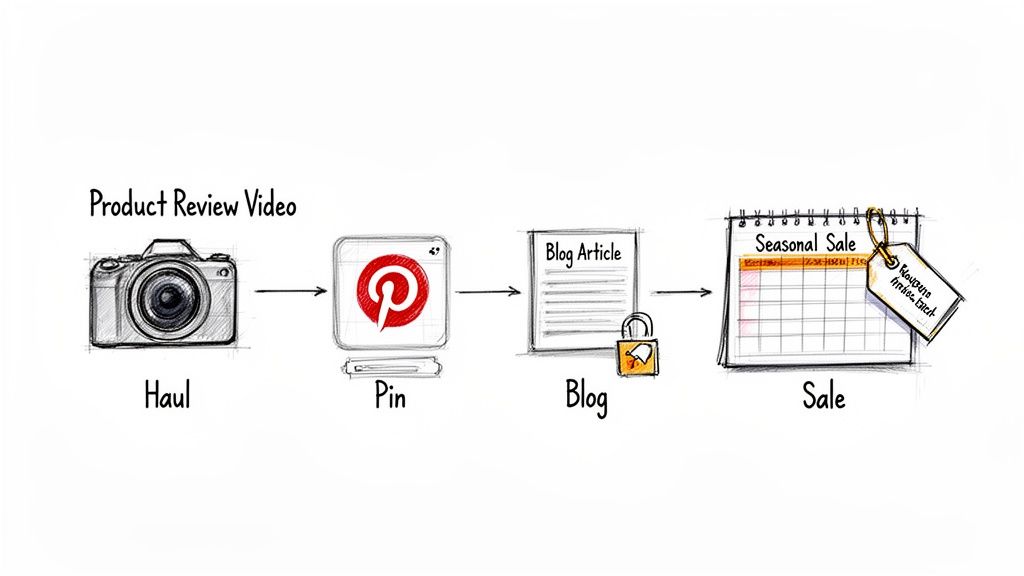
Using these strategies together creates a powerful funnel. A single detailed blog review can be the source material for a YouTube video, a dozen Pinterest pins, and a week's worth of Instagram stories. They all work together to drive traffic and, ultimately, sales.
YouTube Haul Videos: "Target Haul" is a genre for a reason—it works. Film yourself unboxing your latest Target run. People love seeing what you bought and hearing why. If you want to create videos faster, you could even try an AI text-to-video generator to turn your blog post scripts into simple videos.
Pinterest Idea Pins: Pinterest is less of a social network and more of a visual search engine. It's perfect for home decor, fashion, and DIY projects. Create beautiful pins that show Target products in an aspirational setting, then link them back to your review post.
Instagram Stories and Reels: Use Instagram’s interactive features. Run a poll asking, "What are you shopping for at Target this week?" Then, follow up with story slides featuring your top picks and direct affiliate links. A quick Reel showing three ways to style one dress from Target can get massive views and drive real interest.
The Pros and Cons of the Target Affiliate Program
So, is the Target affiliate program actually the right move for you? Before you jump in, you need an honest look at what you’re getting into—the good, the bad, and the stuff that might make you think twice. Like any affiliate partnership, it has some killer perks and a few drawbacks that could be deal-breakers depending on your niche.
Let's break down if this program really lines up with your strategy.
One of the biggest things going for it is the sheer power of the Target brand. You don't have to waste time explaining who Target is. It’s a household name that people already know and trust, which is a huge advantage. That built-in familiarity makes your audience way more comfortable clicking and buying, which can make your job a whole lot easier and boost your conversion rates right out of the gate.
Another huge plus is the 7-day cookie window. A full week is a generous amount of time for your referrals to make a purchase after clicking your link. It’s a major step up from programs with shorter windows and perfectly fits how people shop today—browsing now and buying later.
Key Advantages for Affiliates
The upsides go way beyond just a recognizable name and a decent cookie policy. The program is set up to work for a ton of different content creators.
- Diverse Product Catalog: Target has everything. We're talking home decor, clothes, groceries, baby gear, you name it. This massive variety means you can almost always find something relevant to promote, no matter what your niche is.
- High-Commission Categories: If you play your cards right, the earning potential is solid. Rates can hit 8% in super profitable categories like Home & Outdoor Living and Apparel. Focus your content there, and you can do very well.
- Reliable Network: The program runs on Impact, which is a big, trusted platform. You can count on its tracking, reporting, and getting paid on time, which is one less thing to worry about.
Potential Drawbacks to Consider
Okay, but it's not all sunshine and rainbows. The program has some real challenges, and the biggest one is the commission structure for some of the most popular categories out there.
The low 1% commission rate on electronics, video games, and toys can be a major hurdle. You need to drive some serious sales volume in these niches to see a meaningful income. If you're a tech or gaming creator, you absolutely have to factor this in.
On top of that, some things are completely excluded from commissions. Don't expect to earn on gift cards or certain hot new-release products. You also have to hit a certain sales volume to unlock the higher commission rates, which can be a tough climb for brand-new affiliates.
To make this work, you need a smart game plan. Driving consistent traffic is key, so it’s wise to get your online presence dialed in with effective social media management for affiliate marketers.
At the end of the day, the Target affiliate program is a fantastic opportunity, especially if your audience is into home, fashion, or family-related content. But your success hinges on building a strategy that leans into its strengths while carefully navigating its weaknesses.
Your Top Questions Answered
Alright, let's tackle some of the most common questions that pop up when people are thinking about joining the Target affiliate program. Getting the lay of the land before you dive in is always a smart move.
Top Affiliate Questions Answered
New affiliates always want to know where the money is. With a catalog as massive as Target's, it's easy to get lost, but a few categories consistently outperform the rest.
What are the best product categories to promote?
Focus your energy on categories like Home Goods, Apparel & Accessories, and Baby Gear. These often have the highest commission rates, sometimes reaching up to 8%. Pushing these products can make a huge difference in your earnings compared to grinding away on lower-paying categories.Can I be a Target affiliate if I'm also an Amazon Associate?
Absolutely. In fact, you should be. Tons of successful affiliates, myself included, promote products from both Target and Amazon. It gives your audience options and, more importantly, diversifies your income.
I always recommend joining both the Target affiliate program and Amazon Associates. Think of it as a safety net. You never want all your eggs in one basket, and it lets you test which offers resonate best with your readers.
Payments and Program Requirements
Let's talk logistics. Understanding how you get paid and what it takes to get approved is crucial before you even think about applying.
How and when do I get paid?
All payments run through the Impact Radius network, which is pretty standard stuff. You can set up your payment preferences for direct deposit or PayPal. Once you hit the minimum payment threshold in your Impact account, they typically pay out monthly.What are the minimum requirements for approval?
Target doesn't post a hard-and-fast traffic number, but they are looking for high-quality sites. This means your website needs to be established, look professional, and have plenty of original content. You'll also need a clear privacy policy. If your site looks like it's still under construction or is thin on content, expect to be rejected.